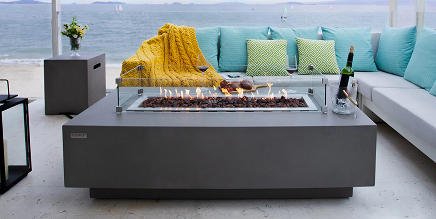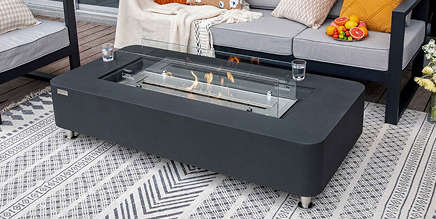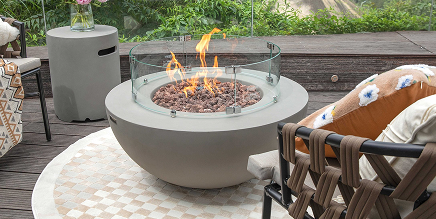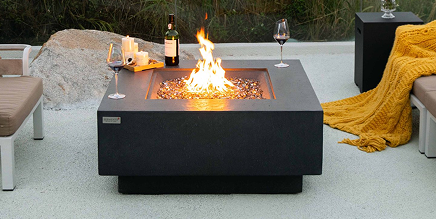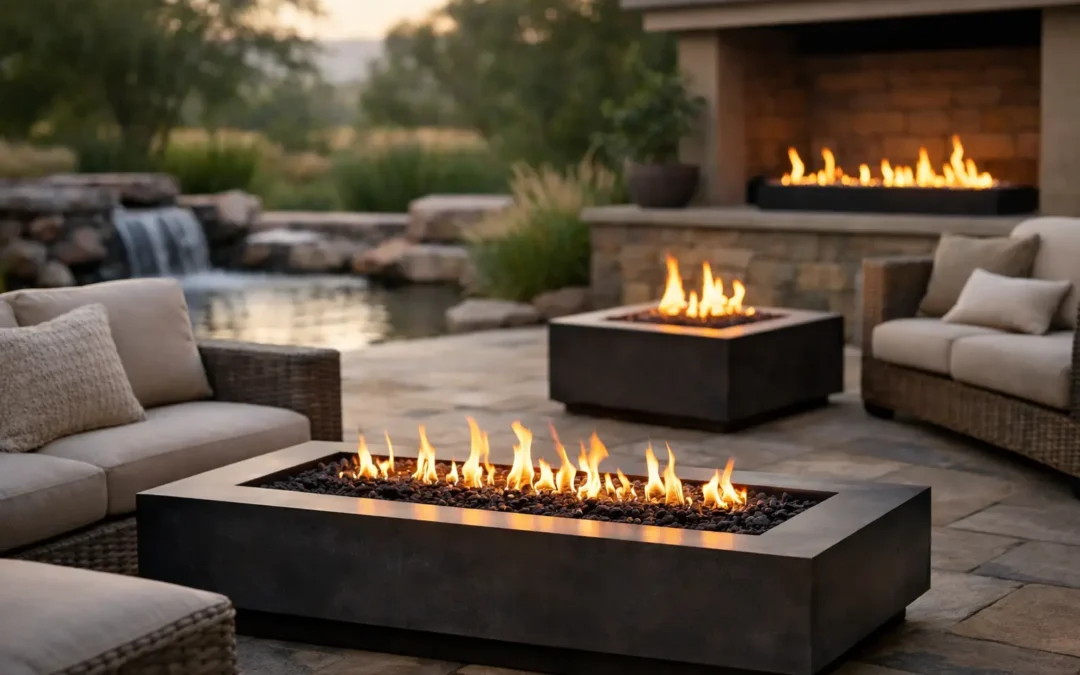
The wrong fire feature can throw off an otherwise well-designed backyard. A piece that looks too heavy, burns too low, or fights the surrounding stone and tile can make a finished outdoor space feel unresolved. When homeowners and designers compare fire bowl vs fire pit options, the real question is not simply which one produces flame. It is which one belongs in the setting you are building.
Both can be beautiful, durable, and functional. Both can become a focal point. But they serve different design goals, and the differences matter more in premium outdoor spaces where proportion, material selection, and placement need to work together.
Fire bowl vs fire pit: the core difference
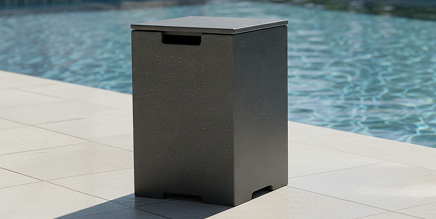
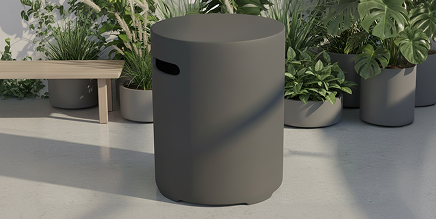
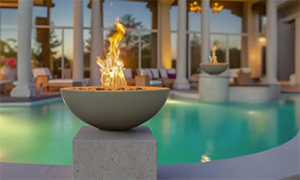
A fire bowl is typically more sculptural and elevated in appearance. It is often compact, architectural, and designed to be seen as a decorative element as much as a source of flame. Fire bowls are especially common around pools, on columns, along entry sequences, and in patios where symmetry and clean visual lines matter.
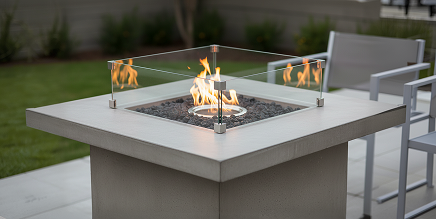
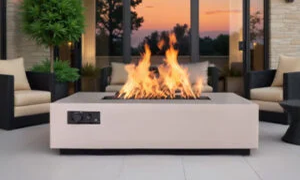
A fire pit is generally broader and more communal. It is designed around gathering, with flame centered in a larger footprint that encourages seating around it. In many backyard layouts, a fire pit acts as the anchor for a conversation area rather than an accent piece integrated into the larger landscape composition.
That distinction shapes nearly every buying decision that follows. If your priority is visual refinement, integration with hardscape materials, and a more tailored architectural feel, a fire bowl usually makes more sense. If your priority is gathering space, heat spread, and a casual social layout, a fire pit often has the advantage.
How each one changes the look of a space
In upscale outdoor design, form matters as much as function. A fire bowl creates a more vertical visual statement. It draws the eye upward and works well when you want flame to punctuate the perimeter of a pool, define steps, frame a seating wall, or add repetition across a larger yard. Because bowls are often installed on pedestals, columns, or raised surfaces, they can feel intentional without taking over the space.
A fire pit creates a stronger horizontal presence. It occupies more visual weight at ground level and usually becomes the center of one dedicated zone. That can be exactly right for a patio designed around conversation seating, but it can also feel bulky if the surrounding space is already carrying a lot of texture or mass through retaining walls, outdoor kitchens, or oversized furniture.
This is where scale becomes important. In a compact courtyard or a clean-lined pool deck, a fire bowl can deliver impact without crowding the footprint. In a larger entertaining area with generous seating, a fire pit can ground the space in a way a smaller feature cannot.
Heat output and experience are not the same thing
Many buyers assume the larger feature is always the better one, but the experience around the flame is different.
A fire pit generally offers a wider heat radius and a more traditional gathering feel. People can sit around it, lean in, and interact with the fire as part of the social setting. If your goal is warmth for evening entertaining in a lounge area, a fire pit is often the more practical choice.
A fire bowl usually delivers a more concentrated visual flame than a wide heat field. Its value is not only warmth but ambiance. Around a pool or along a patio edge, that can be the better experience. You are not always trying to heat a crowd. Sometimes you are trying to create drama, rhythm, and a sense of finish in the landscape.
For many luxury outdoor spaces, the best choice comes down to whether the fire feature is meant to host people or complement the architecture.
Placement drives the decision
Placement is one of the clearest separators in the fire bowl vs fire pit conversation.
Fire bowls are remarkably flexible in design-led settings. They can be installed near pools, on pilasters, at the ends of water features, beside entry points, or in raised planters where flame becomes part of a larger composition. Their shape and footprint make them easier to integrate into custom environments where every inch of hardscape has a purpose.
Fire pits need more dedicated clearance and a more intentional seating layout. They are best when the plan already includes a central gathering area with circulation around it. Trying to force a fire pit into a narrow patio or a visually busy poolscape can make the area feel cramped.
For trade professionals, this often comes down to site geometry. For homeowners, it comes down to how they actually use the backyard. If the space is already organized around pool movement, outdoor dining, and architectural views, a fire bowl may support that flow better. If the backyard needs a social center for long evenings outside, a fire pit may be the stronger fit.
Material quality matters more with decorative fire features
Not all fire features age well. In premium outdoor environments, cheap materials show quickly through fading finishes, corrosion, thin construction, and uneven burner performance.
This matters with both products, but especially with fire bowls because they are often installed in prominent locations where finish quality is highly visible during the day as well as at night. A handcrafted bowl built from durable aluminum or stainless steel will hold its appearance and structure far better than lightweight mass-market alternatives. The same goes for finish options that are chosen to complement stone, coping, stucco, or tile rather than fight them.
Fire pits also benefit from quality construction, particularly in burners, ignition systems, and weather resistance. But because the category includes more casual and lower-end products, buyers sometimes underestimate the gap between a decorative backyard pit and a professionally built fire feature intended for long-term architectural use.
Fuel type and installation complexity
Most premium fire bowls and fire pits are gas-fired, typically natural gas or propane. Gas offers cleaner operation, more consistent flame, and easier control than wood, which is one reason it is favored in refined patio and pool environments.
Installation complexity can vary. A simple freestanding fire pit may be easier for some projects, especially if it is part of a straightforward patio seating area. Fire bowls, on the other hand, are often integrated into masonry, columns, or custom structures, which means planning for gas routing, burner fitment, ventilation, and finish coordination from the start.
That does not make bowls harder in a negative sense. It simply means they are more often part of a designed system rather than a standalone addition. If you are already building a custom pool, hardscape, or outdoor living area, that level of integration is often a benefit.
Customization is where fire bowls stand out
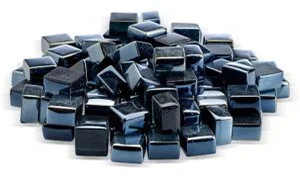
If your project demands visual cohesion, fire bowls usually offer more upside. Shape, size, finish, ignition type, media selection, and compatibility with surrounding materials all play a bigger role when the feature is intended to feel built into the environment.
This is especially relevant in higher-end residential work. A homeowner may need a finish that complements warm limestone, dark porcelain tile, or a specific plaster tone around the pool. A landscape designer may need multiple bowls to repeat consistently across an axis while maintaining exact dimensions and burner performance. Those are not generic product needs. They require a fire feature made with customization in mind.
That is one reason design professionals often lean toward specialized manufacturers such as USA Fire Bowls for projects where appearance and reliability carry equal weight.
When a fire bowl is the better choice
A fire bowl usually wins when the fire feature needs to feel refined, architectural, and visually integrated. It is often the right answer for poolscapes, formal patios, entry statements, and outdoor environments where flame is part of a broader design language. It also makes sense when the project calls for custom color matching, elevated materials, or a feature that works as a focal accent rather than the center of seating.
If your backyard is being built with strong attention to line, proportion, and finish, a fire bowl tends to support that investment.
When a fire pit makes more sense
A fire pit is often the better choice when conversation and heat are the primary goals. It suits larger patios, family gathering spaces, and layouts built around lounge seating. If you want people to circle around the flame with drinks, blankets, and longer evenings outdoors, the broader footprint and social orientation of a fire pit can be more natural.
It can also be the right call when the style of the backyard is less formal and more relaxed, where the feature is meant to invite use first and make a design statement second.
Neither option is automatically better. The stronger choice is the one that matches the way the space should look, feel, and function once everything else is in place.
The best outdoor fire features do more than burn cleanly. They complete the setting. If you are choosing between a fire bowl and a fire pit, start with the space itself, not the category. The right answer is usually the one that looks like it was meant to be there all along.