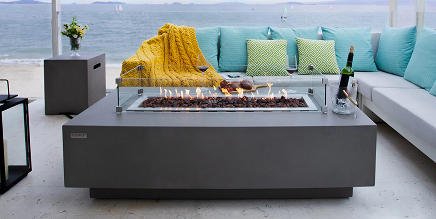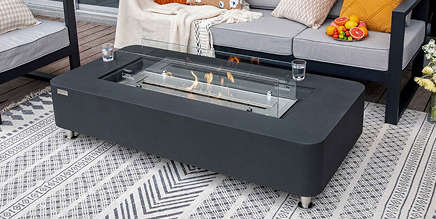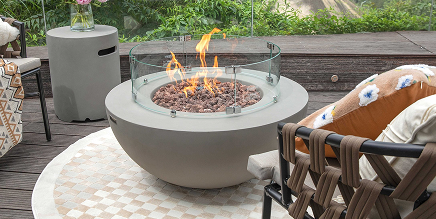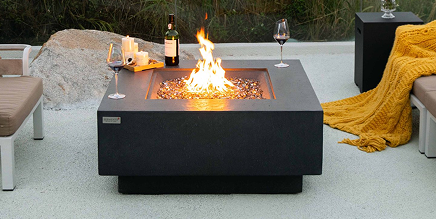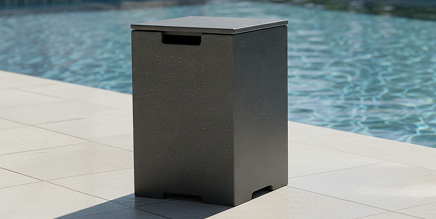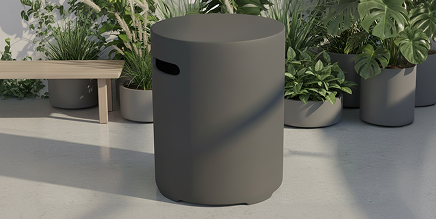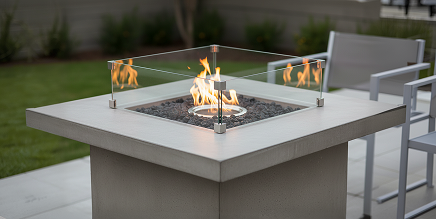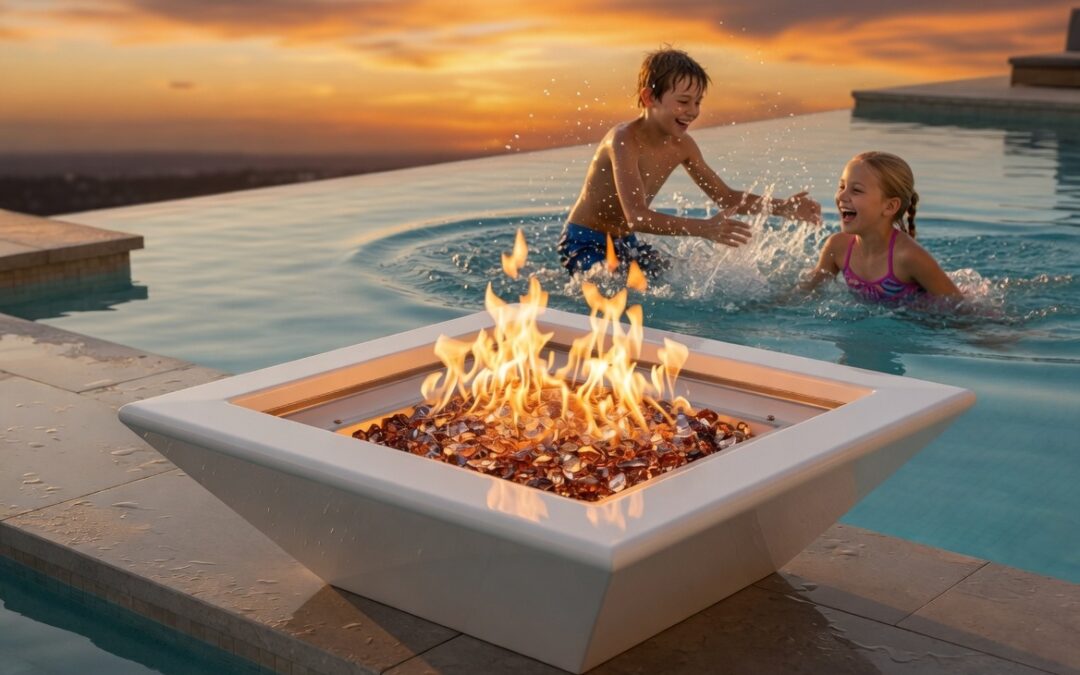
A fire feature is often one of the last visible elements installed in a pool or patio project, yet it has an outsized effect on the finished space. This ready to ship fire bowls guide helps homeowners, pool builders, and landscape professionals choose an available fire bowl without compromising the material quality, proportion, or visual polish a premium outdoor setting requires.
Ready-to-ship models are designed for projects with a defined timeline. Rather than waiting through a fully custom production schedule, you select from established bowl sizes, finishes, burner configurations, and fuel options that are prepared to move more quickly. The result can be a faster path to a finished backyard, provided the specifications are confirmed before the order is placed.
What ready-to-ship actually means
A ready-to-ship fire bowl is not a generic outdoor accessory pulled from a warehouse shelf with no consideration for performance. In a premium category, it is a purpose-built fire feature offered in proven configurations that reduce the lead time associated with custom dimensions, specialty colors, or one-off design details.
The key distinction is configuration. A custom bowl may be built around an exact coping sample, a nonstandard footprint, or a highly specific architectural color. A ready-to-ship bowl typically offers the same strong visual language in a selected group of practical, established choices. That makes it especially useful when the pool shell is complete, the hardscape is moving forward, and the project needs a focal point on schedule.
For some projects, speed is the priority. For others, a precise color match or unusual scale is worth the additional time. The best choice depends on which detail is least flexible: the install date, the design specification, or the site conditions.
Start with placement, not the product photo
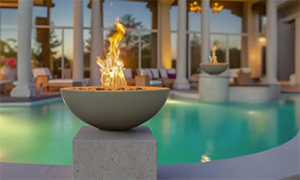
A fire bowl should look intentional from every important viewing angle: inside the home, across the water, from the primary seating area, and from the approach to the patio. Before selecting a size, establish where the bowl will sit and what it must relate to. A bowl placed on a pool wall has a different visual job than one installed as a pair at the edge of a lounge area.
Scale is more than the width of the bowl. Consider the height of the wall or pedestal beneath it, the depth of the pool, nearby furniture, and the distance from the main entertaining zone. A feature that appears substantial in a product image can feel undersized across a broad pool deck. Conversely, an oversized bowl can crowd a compact courtyard or pull attention away from a carefully detailed waterline tile.
Square fire bowls tend to complement clean-lined contemporary architecture and rectilinear pools. Their geometry can echo pavers, tile modules, raised planters, and patio furniture. When the surrounding design uses long horizontal lines, a rectangle fire feature may create a stronger architectural connection. The right shape is the one that supports the existing composition rather than competing with it.
Consider symmetry and sightlines
Pairs of fire bowls create a formal, balanced effect at the ends of a pool wall or along a central axis. A single bowl can be equally compelling when it is used as an intentional focal point near a conversation area or at the far end of a water feature.
Do not choose symmetry simply because two bowls look impressive. A pair needs adequate visual breathing room and a site layout that supports balance. On a narrow deck, one well-proportioned feature may feel more refined than two crowded installations.
Confirm fuel and ignition before ordering
Fuel planning should be resolved early, not after the bowl arrives. Natural gas is often preferred for permanent installations with an available gas line, while propane can suit sites where a permanent gas connection is impractical. Each option affects line routing, shutoff requirements, tank placement, and the installation plan.
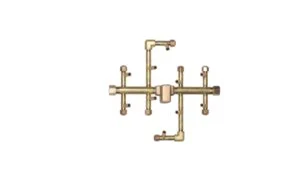
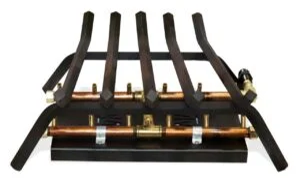
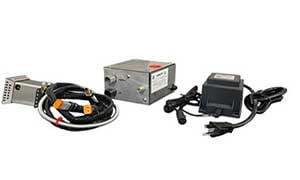
The bowl, burner, valve system, and ignition approach must be compatible. Manual lighting may be appropriate for a straightforward, supervised feature, while electronic ignition can provide added convenience for frequently used entertaining spaces. The right choice depends on the project, local requirements, and the homeowner’s expectations for operation.
Gas work should be completed by a qualified professional who understands applicable codes and the selected fire feature’s requirements. This is particularly important around pools, where drainage, electrical systems, clearances, and equipment access must all be considered together. A beautiful installation should also be safe, serviceable, and correctly supplied with fuel.
Choose materials that support the setting
Premium outdoor fire bowls need more than a handsome finish. They need construction suited to exposure, heat, and regular use. Aluminum construction offers a strong balance of durability and manageable weight, while stainless-steel components are well suited to burner applications where heat and weather resistance matter.
A powder-coated aluminum bowl gives designers and homeowners meaningful flexibility. A carefully selected finish can relate to dark window frames, bronze landscape lighting, charcoal furniture, warm stone, or a pool tile accent. Neutral colors tend to offer the greatest long-term versatility, particularly when the surrounding furnishings may change over time.
The trade-off is straightforward: ready-to-ship finishes can accelerate a project, but they may not duplicate a custom color match exactly. If the bowl must disappear into a specific architectural palette, a custom finish may be the better investment. If the goal is contrast, a proven neutral can create a clean, confident result with less waiting.
Fire media and accessories complete the installation
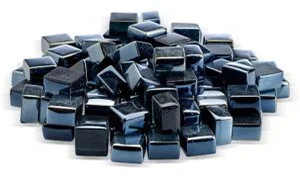
The burner creates the flame, but fire media shapes how that flame is seen. Fire glass is a popular choice for contemporary outdoor settings because it reflects light and provides a tailored, polished surface around the burner. Color selection can be subtle or expressive. Clear, black, bronze, and gray tones often integrate well with upscale hardscape materials, while brighter colors can make the bowl more decorative.
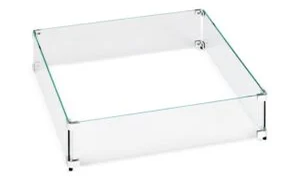
Use the specified amount and type of media for the burner configuration. Overfilling can interfere with flame performance, while an insufficient layer can expose components and make the feature feel unfinished. Flame guards may also be beneficial in locations with frequent breezes, helping define the flame area and reduce disruption from wind.
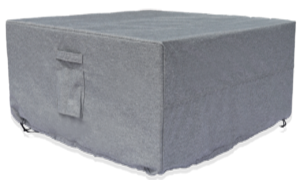
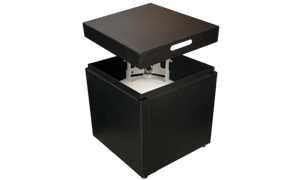
A burner cover and protective cover serve different purposes. A burner cover helps protect the fire media and burner area when the feature is not operating. A fitted protective cover helps shield the entire bowl from debris and weather exposure. For seasonal properties, homes near trees, or projects still under construction, these accessories can protect the visual finish and simplify maintenance.
Ready to ship fire bowls guide: the pre-order check
The fastest purchase is still slowed down by an unresolved jobsite detail. Before selecting a ready-to-ship fire bowl, confirm these essentials with the homeowner, installer, or project team:
- The final installation location, finished surface height, and required clearances.
- Natural gas or propane availability, including line routing and control location.
- The desired bowl size, shape, finish, and fire media color.
- Whether electronic ignition, a flame guard, burner cover, or protective cover is needed.
- Access to the installation area for delivery, staging, and final placement.
This small amount of coordination protects the schedule. It also prevents common problems, such as discovering too late that a gas line is undersized, a pedestal was built to the wrong dimension, or a selected finish does not support the surrounding material palette.
Design for the years after installation
A fire bowl should remain a strong part of the landscape after the reveal day. Choose a size that will still feel appropriate if furniture is rearranged, planters mature, or the outdoor kitchen is expanded. Consider how the feature will be covered, cleaned, and serviced. A well-planned installation keeps access practical without putting mechanical details at the center of the design.
For builders and designers, ready-to-ship options can also bring greater certainty to a client presentation. A defined configuration makes it easier to coordinate the bowl with masonry, plumbing, electrical work, and the overall build schedule. For homeowners, it provides a more direct route to the firelight, atmosphere, and visual warmth that make a poolside space feel complete.
USA Fire Bowls builds handcrafted aluminum fire features for projects where material quality and design integration matter. Whether a ready-to-ship model or a custom solution is the better fit, the most successful choice is the one that respects the site, supports the installation plan, and gives the outdoor space a focal point worth gathering around.