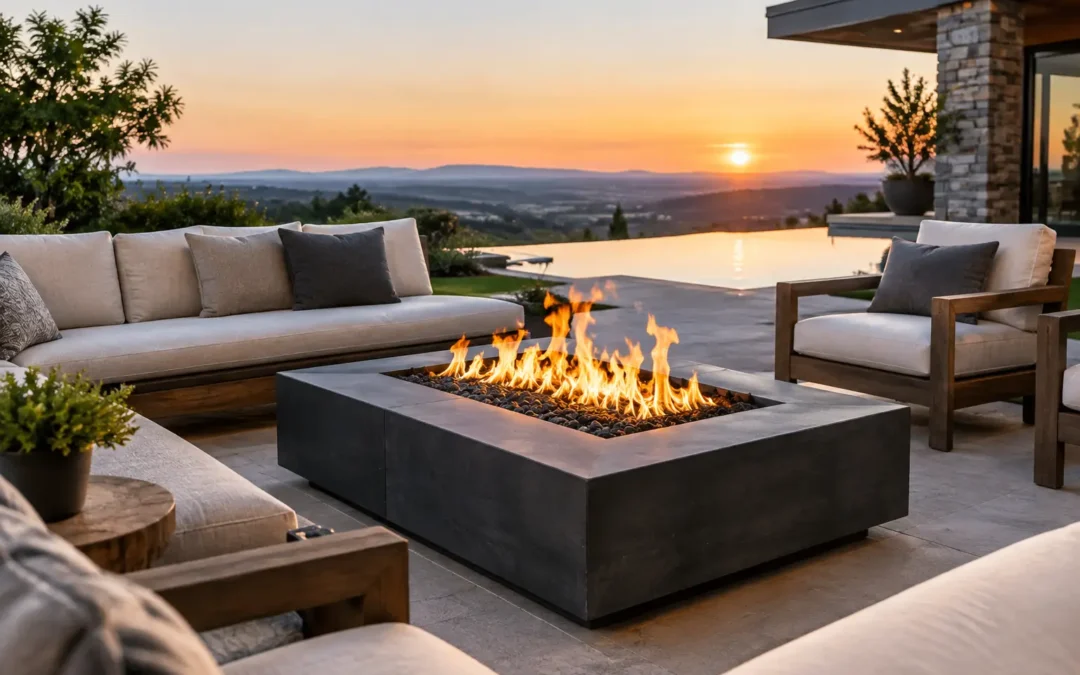
A fire feature can either complete a backyard or make an otherwise refined project feel like it came from a big-box aisle. The best backyard fire pits are selected as part of the architecture: sized for the seating plan, finished to complement surrounding materials, and built to perform through years of outdoor exposure. For a pool patio, an entertaining terrace, or a custom landscape, that standard matters.
The right choice is not always the largest burner or the most elaborate shape. It is the fire pit that creates a purposeful flame presentation, respects clearances and circulation, and holds its visual quality when the furniture, hardscape, and plantings are fully in place.
What Defines the Best Backyard Fire Pits?
Premium fire pits earn their place through a combination of construction, fuel system, proportion, and finish. A handsome fire feature with a poorly designed burner or an undersized enclosure will become a source of frustration. Conversely, a well-built unit can turn an ordinary seating area into the place people naturally gather after sunset.
For upscale outdoor spaces, look first at the material beneath the finish. Powder-coated aluminum offers a compelling balance of strength, corrosion resistance, and manageable weight, particularly in climates with rain, coastal air, or frequent poolside moisture. Stainless-steel burner components are equally important. They support reliable flame distribution and are better suited to long-term exposure than lower-grade metals.
Handcrafted construction also has practical value beyond its appearance. It allows for clean seams, intentional proportions, and customization that helps the fire feature coordinate with tile, coping, stucco, stone, and furnishings rather than compete with them.
Start With How the Fire Pit Will Be Used
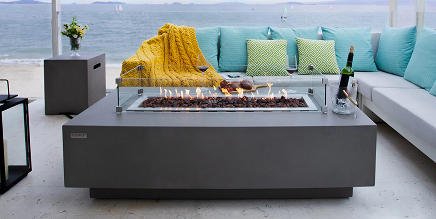
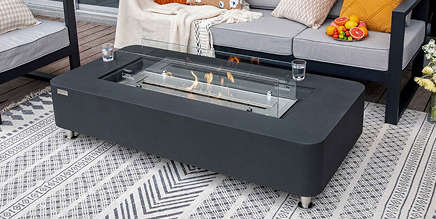
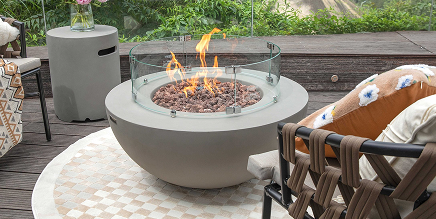
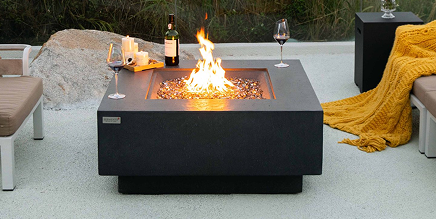
Before choosing a shape or color, decide what role fire will play in the yard. A compact fire bowl can provide a sculptural flame near a pool edge or garden wall. A larger square fire pit can anchor a conversational furniture arrangement. A long rectangular fire feature can define the perimeter of a terrace, create separation between outdoor zones, or echo the linear geometry of a modern pool.
If the goal is warmth for a group, prioritize a configuration that allows seating around the flame and leaves room for guests to move comfortably. If the goal is visual drama, especially beside water, a fire bowl or linear feature may be more appropriate. Decorative fire is often less about heat output than focal-point value, so it deserves a location with a clear sightline from indoor living areas, the pool, and primary seating.
For designers and builders, the fire feature should be resolved early in the plan. Adding it after the patio is finished can compromise gas routing, electrical access for ignition systems, drainage, and the ideal placement of furniture.
Choose a Fuel System That Fits the Project
Gas fire pits are typically the natural choice for high-end residential patios. They light quickly, produce a controlled flame, and avoid the ash, smoke, and wood storage associated with wood-burning designs. Natural gas offers continuous fuel through a properly installed line, making it well suited to permanent installations and frequent entertaining. Propane offers more placement flexibility but requires a concealed, accessible tank solution and periodic refills.
The best option depends on the site. A new pool or hardscape project is an excellent time to run a dedicated natural-gas line. For a finished patio where trenching would be disruptive or impractical, propane may be the sensible alternative. In either case, have a qualified professional confirm gas sizing, local code requirements, shutoff placement, and ventilation needs.
Wood-burning fire pits still appeal to homeowners who want the ritual and aroma of a traditional campfire. They are usually less compatible with polished pool patios, closely spaced neighbors, or areas with seasonal burn restrictions. Smoke direction, cleanup, sparks, and the need for dry firewood are real trade-offs, not minor details.
Match the Shape to the Landscape Geometry
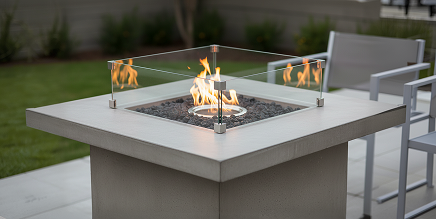
A fire pit should relate to the lines already present in the backyard. Square fire pits are exceptionally versatile because they work naturally with sectional seating, four-chair arrangements, and symmetrical hardscape layouts. They offer a substantial center point without demanding a large linear wall or expansive patio footprint.
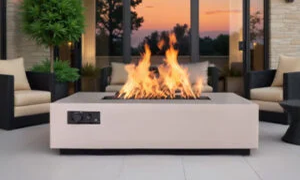
Rectangle fire pits create a more architectural effect. Their length works beautifully along a retaining wall, at the end of a pool, or between a lounge area and dining zone. They can also soften the divide between multiple outdoor rooms by drawing the eye across the landscape. However, a rectangle needs enough surrounding space to avoid feeling like an obstacle in a walkway.
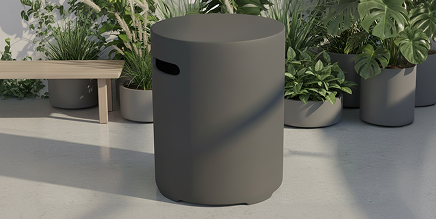
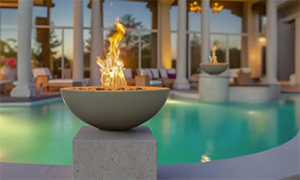
Round fire bowls bring a contrasting form to angular pools and patios. Used in pairs or repeated along a water feature, they introduce rhythm and create an elevated resort-like impression. The right shape is rarely about trend alone. It is about whether the feature reinforces the project’s existing proportions.
Size the Fire Feature for People, Not Just the Patio
A common mistake is selecting a small fire pit for a large seating area because it appears efficient on a plan. Once installed, it can disappear visually and produce a flame that lacks presence. On the other hand, an oversized unit can dominate a modest courtyard and leave insufficient clearance for chairs, pathways, and service access.
Begin with the seating layout. Guests should be able to enjoy the flame without leaning forward uncomfortably, while the unit should remain far enough from cushions, umbrellas, low branches, and other combustible materials. Confirm the manufacturer’s required clearances and your local regulations before finalizing the location.
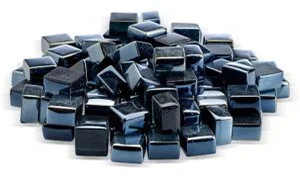
Scale also includes flame height and burner size. A wide burner opening with a modest flame can feel more elegant than an aggressively tall flame that distracts from conversation. Fire glass can add depth and color reflection, while lava rock creates a more natural, textured presentation. Both require a burner system designed for the selected media and the intended fuel type.
Do Not Treat Finish as an Afterthought
In a luxury backyard, a fire pit finish should connect to the broader material palette. Matte black can sharpen a contemporary poolscape. Bronze or warm brown can complement travertine, desert plantings, and natural stone. A custom powder-coated color can tie the feature to window frames, outdoor cabinetry, tile accents, or architectural metalwork.
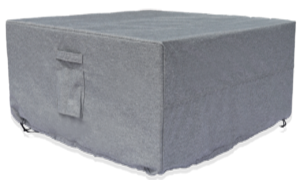
The practical benefit of a quality powder coat is protection from weather and routine use. Still, no finish is maintenance-free. Covering the unit when it is not in use, keeping drainage paths clear, and cleaning debris from the burner area protect both the surface and the ignition components. In snowy, coastal, or high-wind regions, a fitted protective cover is a particularly worthwhile accessory.
For projects where exact coordination matters, custom color matching is more than a decorative upgrade. It prevents the fire feature from looking added on after the fact. USA Fire Bowls builds handcrafted aluminum fire features in California with customization options that support this level of design integration.
Plan for Installation, Access, and Protection
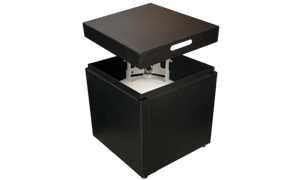
A fire pit may look self-contained, but it relies on the systems around it. Gas connections, electronic ignition, drainage, media depth, and ventilation all affect performance. Enclosures that house propane tanks need appropriate ventilation. Burner pans should remain clear of standing water. If an ignition system requires electrical power, plan that connection before hardscape installation rather than relying on an exposed extension solution later.
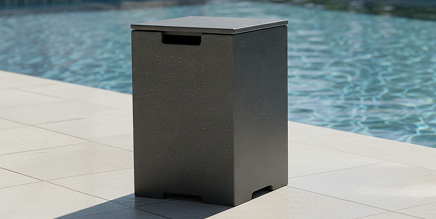
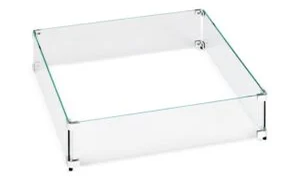
A burner cover is useful when the flame is off, particularly when the fire feature is near trees, a pool, or an active entertaining area. It helps keep leaves, dirt, and water away from burner components. A flame guard can add a layer of protection from wind while maintaining an open view of the fire. These accessories should suit the specific unit rather than be treated as universal add-ons.
For poolside applications, placement deserves added care. Fire features should enhance the water’s reflections without interfering with safe pool circulation, service access, or splash zones. Coordinate with the pool builder, landscape contractor, and gas professional so every trade is working from the same plan.
A Better Way to Make the Final Choice
Instead of choosing from a product image alone, evaluate a fire pit in the context of the complete outdoor room. Consider the view from inside the home, the furniture arrangement, the finished deck elevation, the available fuel source, and the maintenance expectations. Then select the form, size, media, and finish that answer those conditions.
The best backyard fire pits do more than produce flame. They make the backyard feel composed after dark, give gatherings a natural center, and carry the same level of craftsmanship as the pool, patio, and home around them. Choose one with that full setting in mind, and it will feel less like an accessory and more like a permanent part of the landscape.