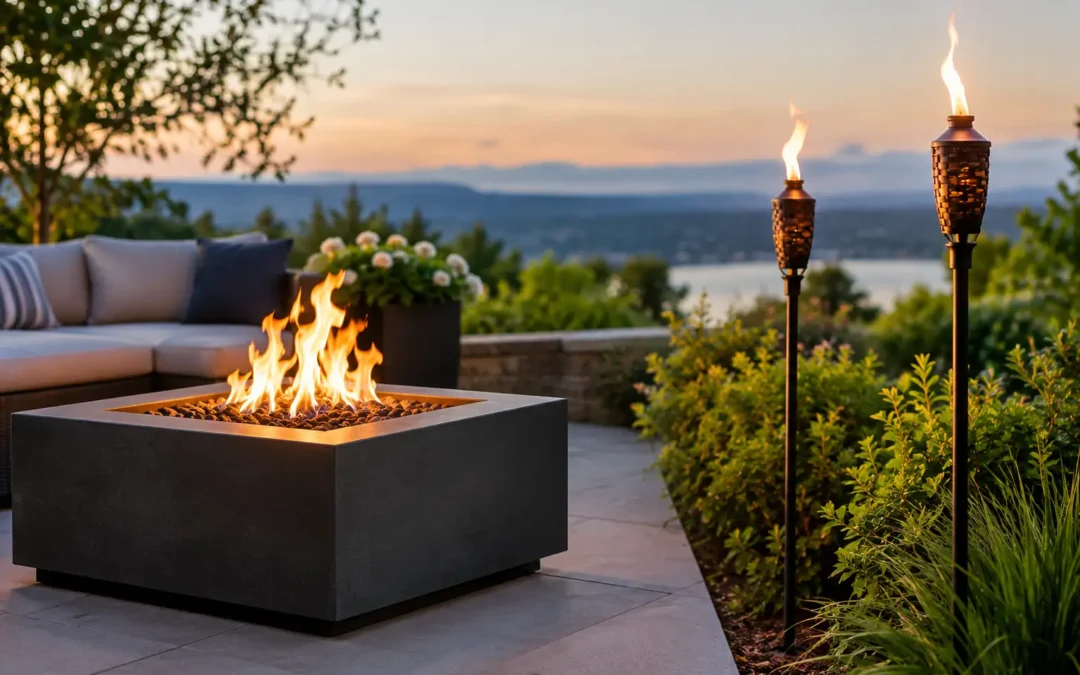
A fire feature can change the entire read of a pool deck after sunset. The choice between fire bowls versus torches is not simply about adding flame. It determines where the eye lands, how the space feels from the house, and whether the finished landscape reads as relaxed, dramatic, architectural, or resort-inspired.
For a luxury outdoor project, both options can be appropriate. The better fit depends on the role fire needs to play in the design, the scale of the property, the construction details already in place, and the level of permanence the client expects.
Fire Bowls Versus Torches: The Design Difference
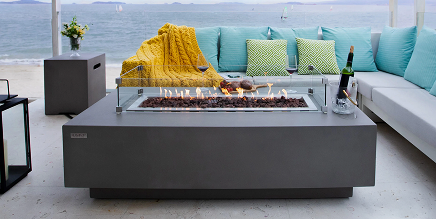
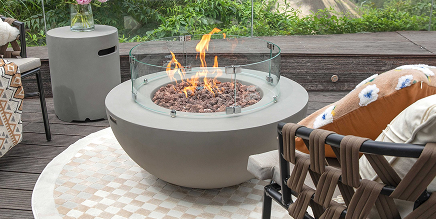
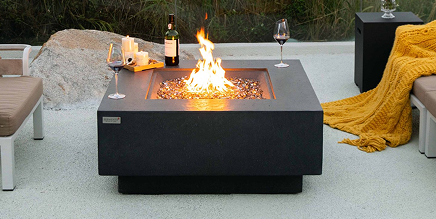
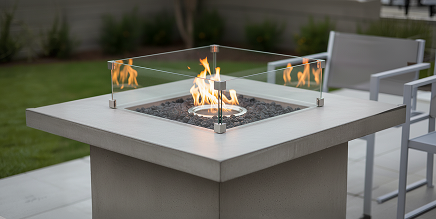
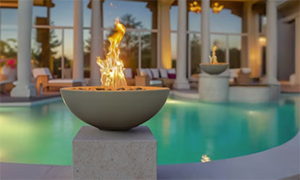
Fire bowls are substantial, grounded features. They sit on pedestals, seat walls, coping, columns, or carefully planned hardscape locations, creating a clear visual anchor. A square or rectangular fire bowl can echo the geometry of a modern pool, coordinate with clean-lined pavers, and bring a balanced sense of weight to a patio or water feature.
Torches create a different effect. Their vertical flame and slender profile draw the eye upward. They tend to feel lighter, more rhythmic, and more tropical, especially when installed in a repeated sequence around a pool perimeter or along the edge of a large entertaining area. Rather than serving as a focal point, torches often act as accents that establish movement and atmosphere.
That distinction matters when designing for a premium backyard. A single fire bowl may feel intentional and complete at the end of a reflecting pool. Four torches may be more effective along a broad waterline where the goal is to frame a view without visually crowding it.
When Fire Bowls Are the Better Choice
A fire bowl is usually the stronger choice when the outdoor design calls for architectural presence. Its form is visible even when the burner is off, so the vessel itself becomes part of the daytime landscape. That makes material, finish, shape, and proportion central to the selection process.
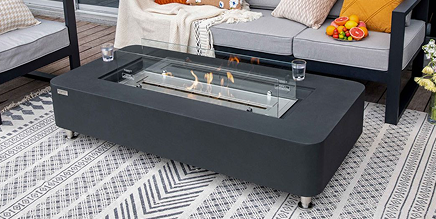
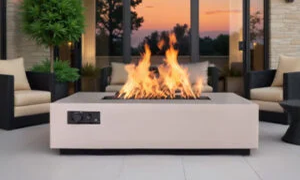
Square fire bowls suit contemporary pools, straight-edged patios, and homes with crisp rooflines or modern masonry. Rectangular models can reinforce a linear pool, define the end of a long deck, or add visual width to a seating area. A well-proportioned bowl can also break up expansive hardscape by introducing a warm focal point at the right height.
Fire bowls are especially effective in these applications:
- Poolside pedestals or raised bond beams where flame can be viewed from both the water and the home
- Paired installations that frame a pool, spa, outdoor kitchen, or distant view
- Formal patios that need a substantial feature after sunset
- Landscapes where the fire feature must coordinate precisely with stone, tile, stucco, or exterior paint
Because the bowl is a permanent visual object, customization has real value. Powder-coated aluminum construction offers a durable, refined finish while avoiding the excessive weight and maintenance concerns that can come with some masonry or concrete vessels. Custom color matching can help the feature relate to pool tile, cabinet finishes, architectural metalwork, or a specific palette established by the landscape designer.
For homeowners who want a feature that feels tailored rather than added later, a handcrafted fire bowl is often the clear direction. USA Fire Bowls builds these pieces in California with aluminum bodies and stainless-steel components selected for long-term outdoor performance.
Consider Scale Before Selecting a Bowl
The most common mistake with fire bowls is choosing a size that is too small for the setting. A modest bowl can disappear beside a wide pool or tall retaining wall. Conversely, oversized bowls can dominate a compact courtyard and make seating areas feel crowded.
Look at the feature from the primary viewing points: indoors through major glass openings, from the dining table, from lounge chairs, and from within the pool. The bowl should have enough visual mass to register from those positions without blocking circulation or competing with the home’s architecture.
Flame height should follow the same logic. Larger burners create stronger presence, but a taller flame is not automatically better. Wind exposure, nearby planting, overhangs, and sightlines all influence the appropriate burner size and flame adjustment.
When Torches Make More Sense
Torches are often the right answer when the project needs repetition, vertical emphasis, or a lighter decorative touch. Their narrow form works particularly well at the far edges of a property, where a full fire bowl might feel too heavy or consume too much usable deck area.
A row of torches can establish a procession toward a pool, outdoor bar, or waterfront view. In a larger backyard, they can also help define the boundaries of an entertaining zone after dark. The eye follows their flame from one point to the next, producing an animated effect that a single focal feature cannot replicate.
Torches may also suit projects with a distinctly resort-oriented style. Near palms, lush planting, natural stone, and freeform water, their upright flames can contribute to a relaxed destination feel. That said, a torch installation still benefits from disciplined placement. Randomly positioned torches can look like afterthoughts. Even spacing and alignment with pool geometry, planting beds, or hardscape joints create a much more polished result.
Their lighter visual footprint can be an advantage, but it is also a limitation. During daylight, torches generally have less sculptural impact than a substantial bowl. If the backyard needs a compelling centerpiece at noon as well as at night, a fire bowl will usually offer more value.
Practical Considerations Beyond Appearance
The visual decision should come first, but installation requirements can narrow the options. Both fire bowls and torches require thoughtful planning around fuel supply, burner access, shutoff components, drainage, and local code requirements. Gas line sizing should be coordinated with the burner’s BTU demand and the total number of fire features planned for the project.
Placement is equally important. Keep flames clear of combustible materials, low branches, fabric structures, and areas where people routinely pass close by. For pool applications, installers should also consider splash zones, wind patterns, and the direction of prevailing views. A feature that looks beautiful from the patio but blows flame and heat toward a seating group will not be enjoyable in regular use.
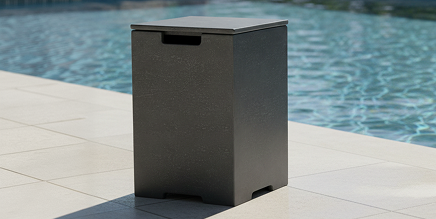
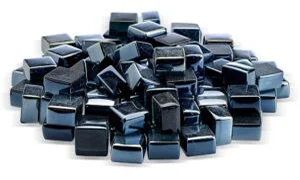
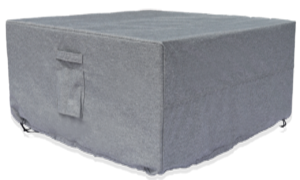
Maintenance expectations differ more by construction quality than by category. Durable aluminum bodies, quality stainless-steel burners, proper drainage, and fitted protective covers all help preserve a premium fire feature. Fire media should be selected for the burner system and maintained according to the manufacturer’s guidance. A burner cover protects the ignition area and media when the feature is not in use, while a full protective cover helps shield the exterior finish from debris and weather.
For trade professionals, service access deserves attention before hardscape is finalized. Valves, connections, and control components should remain reachable for inspection or repair. A beautifully integrated feature is only successful if it can be safely maintained without dismantling the surrounding patio.
Can a Project Use Both?
Absolutely. Many of the strongest outdoor environments use fire bowls and torches for separate jobs. Fire bowls can establish the primary focal points, such as paired features at the pool’s far edge or a statement piece near a spa. Torches can then extend the visual language along pathways, planting beds, or the perimeter of a larger entertaining area.
The key is hierarchy. If every feature is large and bright, the backyard can feel visually busy after dark. Let the bowls carry the architectural weight and use torches as supporting elements. Match flame color, metal finishes, and installation details so the features appear designed as one system rather than purchased at different times.
Choosing for the Way the Space Will Be Used
For homeowners, the decision often comes down to the desired experience. Choose fire bowls when the goal is a lasting architectural feature that complements the pool, patio, and home during the day and creates a confident focal point at night. Choose torches when the design needs vertical rhythm, perimeter lighting, or a lighter resort-style atmosphere.
For builders and designers, start with the plan view and elevation rather than the product image. Consider scale, circulation, viewing angles, fuel routing, materials, and the relationship between the flame and water. The right fire feature should feel inevitable in the finished space, as though the landscape was designed around it from the first sketch.
The best choice is the one that gives the backyard a clear point of view. When flame, finish, and placement are handled with care, it becomes more than outdoor décor. It gives people a reason to stay outside a little longer.