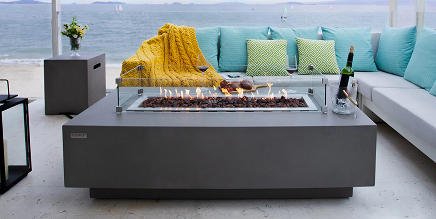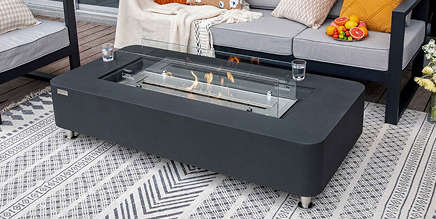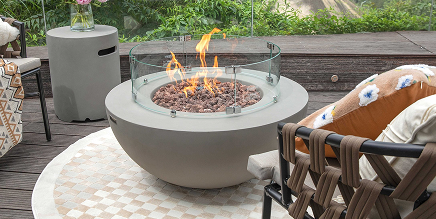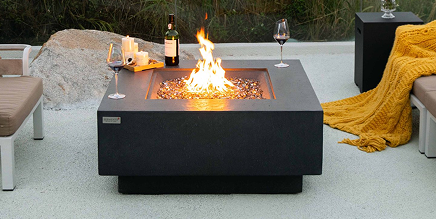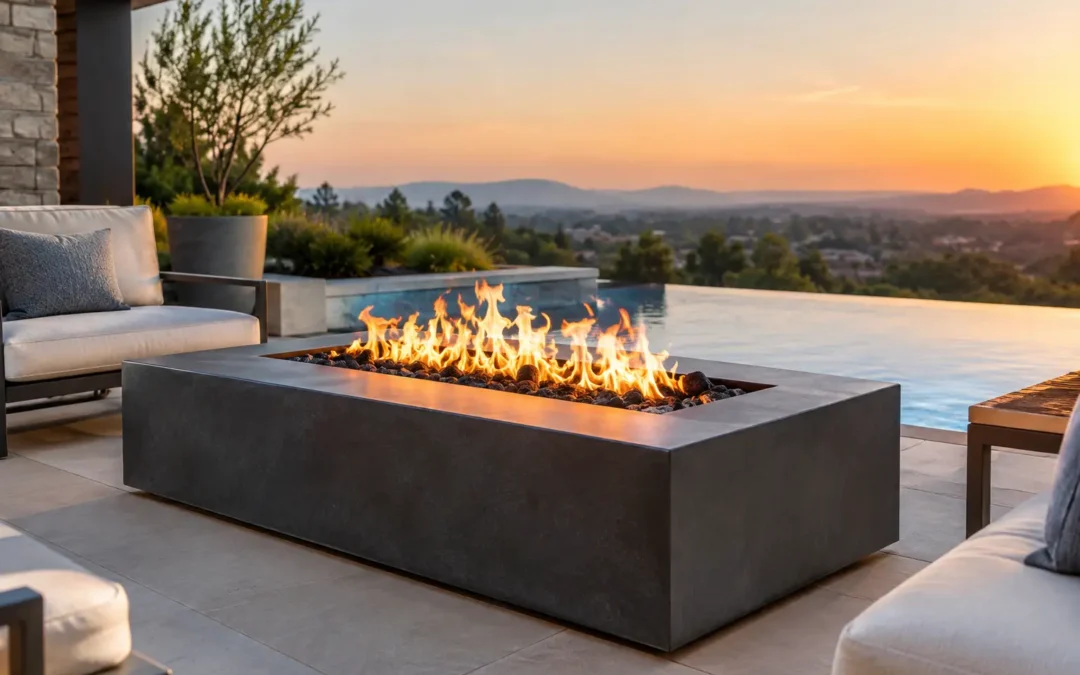
A custom fire feature case study is most useful when it begins with the constraints, not the finished photograph. In a luxury backyard, a fire bowl has to do more than produce a beautiful flame. It must belong beside the pool, coordinate with the hardscape, perform reliably outdoors, and arrive with the right specifications for installation.
The following design scenario reflects the decisions homeowners, pool builders, and landscape professionals face when planning a tailored fire feature for a contemporary pool patio. It is not about adding fire as an afterthought. It is about making it a deliberate part of the exterior architecture.
The Project: A Pool Patio Needed a Stronger Focal Point
The setting was a newly completed backyard centered on a rectangular swimming pool, pale porcelain decking, warm gray coping, and a low linear retaining wall. The home had a clean, modern profile, but the patio lacked a visual anchor after sunset. The pool water reflected landscape lighting well, yet the far corners of the pool felt unfinished and visually flat.
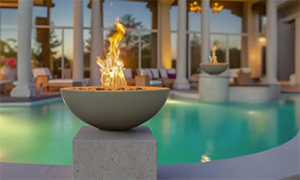
The design team considered built-in fire pits, but a fully masonry-clad structure would have added time and coordination to a project already nearing completion. It also would have limited future flexibility. The better fit was a pair of square fire bowls placed on prepared pedestals at opposing pool corners.
That decision created a new challenge: the bowls could not look like generic outdoor accessories. Their color, scale, flame height, and installation details needed to support the architecture already in place.
Why a Standard Fire Bowl Was Not Enough
A ready-to-ship fire bowl can be the right answer for many patios. When the project calls for a classic finish, standard dimensions, and a short turnaround, it is often the most efficient path. This project was different because the selected materials had unusually specific undertones.
The coping read cool gray in full daylight but warmer at dusk. The stucco walls had a soft charcoal finish, and the metal patio furniture used a matte black frame. A mismatched bowl color would have been obvious from the house and even more noticeable when reflected in the pool.
The builder also needed a feature sized appropriately for the pedestals without crowding the walking path. Oversized bowls would dominate the pool edge. Undersized units would look incidental rather than intentional. Custom sizing and finish selection became practical requirements, not cosmetic upgrades.
The Custom Fire Feature Case Study: Design Decisions That Matter
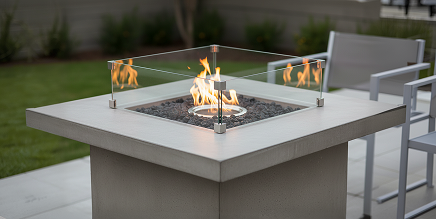
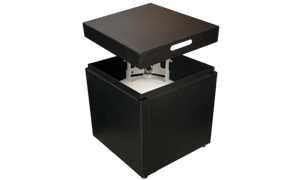
The final concept used two square aluminum fire bowls with a custom powder-coated finish selected to bridge the charcoal stucco and black furnishings. Aluminum was chosen for its durability and corrosion resistance in an outdoor setting, especially one exposed to poolside moisture, irrigation overspray, and changing weather.
Rather than attempting an exact imitation of the porcelain deck or stone coping, the finish was used as a controlled contrast. This is often the stronger design move. Matching every surface can make an outdoor space feel overly coordinated. A darker, complementary fire feature gives the eye a defined focal point while keeping the overall palette cohesive.
The bowl dimensions were selected around the pedestal footprint and sightlines from the main seating area. The goal was a substantial silhouette with enough visual weight to hold its own against the pool, without obstructing the view across the water. Square forms reinforced the rectilinear geometry of the pool and patio, creating continuity that a rounded bowl may not have achieved.
Flame Presentation Was Part of the Design
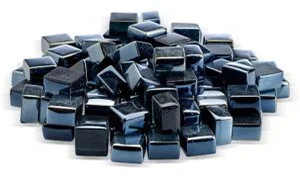
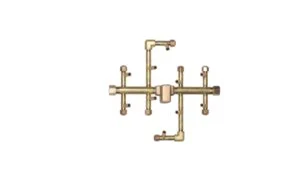
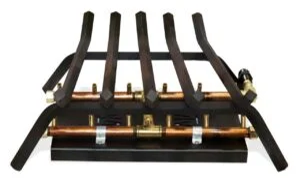
The burner and media selection were considered as carefully as the exterior finish. A burner needs to distribute flame consistently across the opening, while the chosen fire media affects both appearance and maintenance. Fire glass provided a refined, reflective surface that complemented the pool water and gave the bowls a finished appearance even when they were not in use.
The flame was specified for visual presence rather than maximum height. Taller flames can create drama, but they can also become distracting near dining areas, exposed patios, or low rooflines. In this setting, a balanced flame pattern created warmth and movement without competing with the view or overwhelming the space.
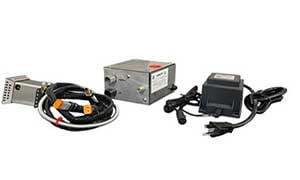
Fuel planning came early. The project used a professionally planned gas connection, with the necessary gas line sizing, shutoff access, and routing addressed before the pedestals and final patio details were completed. This is where early coordination protects both the budget and the finished appearance. Retrofitting a gas line after hardscape installation can add expense and may force compromises in placement.
Installation Details Protected the Finished Look
A premium fire feature is only as successful as its installation. Before the bowls arrived, the contractor confirmed the mounting surface, utility access, clearances, and drainage around each pedestal. The pedestals were built to support the bowls securely and to conceal the gas connection cleanly.
This approach eliminated a common problem: a well-made fire bowl paired with visible supply components or an improvised base. The hardware, burner access, and utility routing should be planned so the completed feature reads as one composed element.
The installer also verified local code requirements and manufacturer guidance for the selected fuel type and location. Fire features near pools require particular care with placement, traffic flow, overhead structures, and adjacent materials. A qualified installer should handle gas connections and complete final testing. Design intent matters, but safe operation comes first.
Accessories Were Chosen for Everyday Ownership
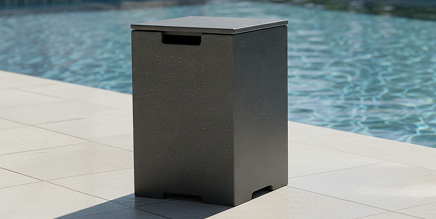
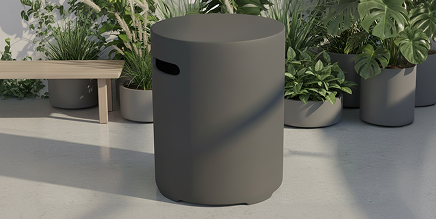
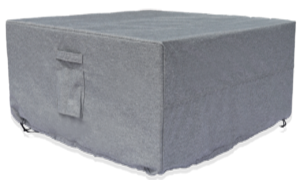
The homeowner wanted the patio to feel polished year-round, not just during an evening gathering. Burner covers were included to protect the media when the fire features were off and to provide a cleaner appearance during the day. Protective covers were also selected for periods of heavy weather, seasonal disuse, or extended travel.
These details may seem secondary during the design phase, but they make ownership easier. Covers help keep debris out of the burner area, protect finishes, and reduce the time needed to prepare the bowls for use. For homeowners who value a consistently well-kept outdoor space, that practical benefit is significant.
The Result: Fire That Belongs to the Architecture
Once installed, the pair of bowls changed how the backyard functioned after dark. During the day, their tailored finish and squared profile gave the pool corners a sense of completion. At night, the reflected flame created depth across the water and extended the visual boundary of the patio.
The success of the project was not simply that it added fire. It created a repeatable experience: poolside entertaining felt more deliberate, the seating area gained a natural center of gravity, and the backyard maintained its design discipline from daylight through evening.
For the builder, the benefit was equally practical. Because finish, dimensions, fuel planning, and accessories were addressed as one package, there were fewer last-minute decisions at installation. That is particularly valuable on high-end projects, where a minor mismatch can be visible to everyone involved.
What This Project Teaches Homeowners and Trade Professionals
The lesson from this custom fire feature case study is that customization has the greatest value when it solves a real design or installation problem. A custom color can connect several materials that would otherwise compete. A tailored size can preserve circulation and proportion. The right burner configuration can create the desired atmosphere without introducing unnecessary maintenance or visual excess.
Customization is not always required. A standard bowl can be an excellent choice for a straightforward patio, a faster project schedule, or a more limited budget. But when a fire feature sits beside a custom pool, architectural stonework, or carefully selected exterior finishes, the ability to refine the details can be what separates a good result from a finished outdoor environment.
USA Fire Bowls builds handcrafted aluminum fire features in the United States for projects where those details matter. For homeowners and professionals alike, the best next step is to define the bowl location, fuel source, finished dimensions, and surrounding materials before making a final selection. A fire feature should feel as though it was always part of the plan.