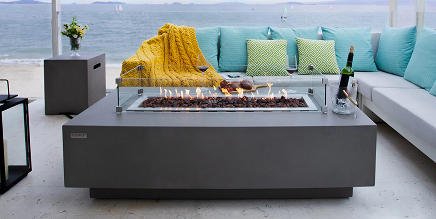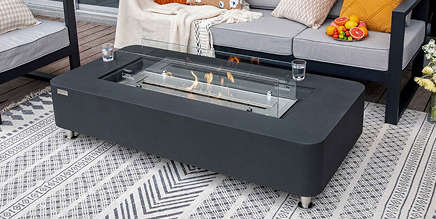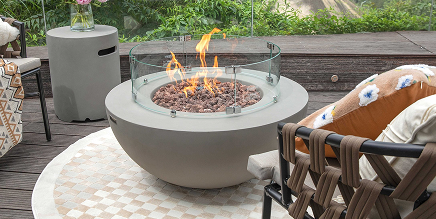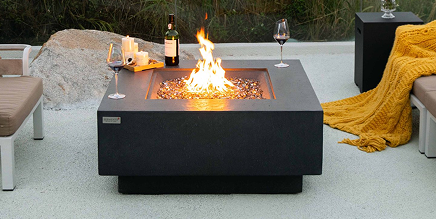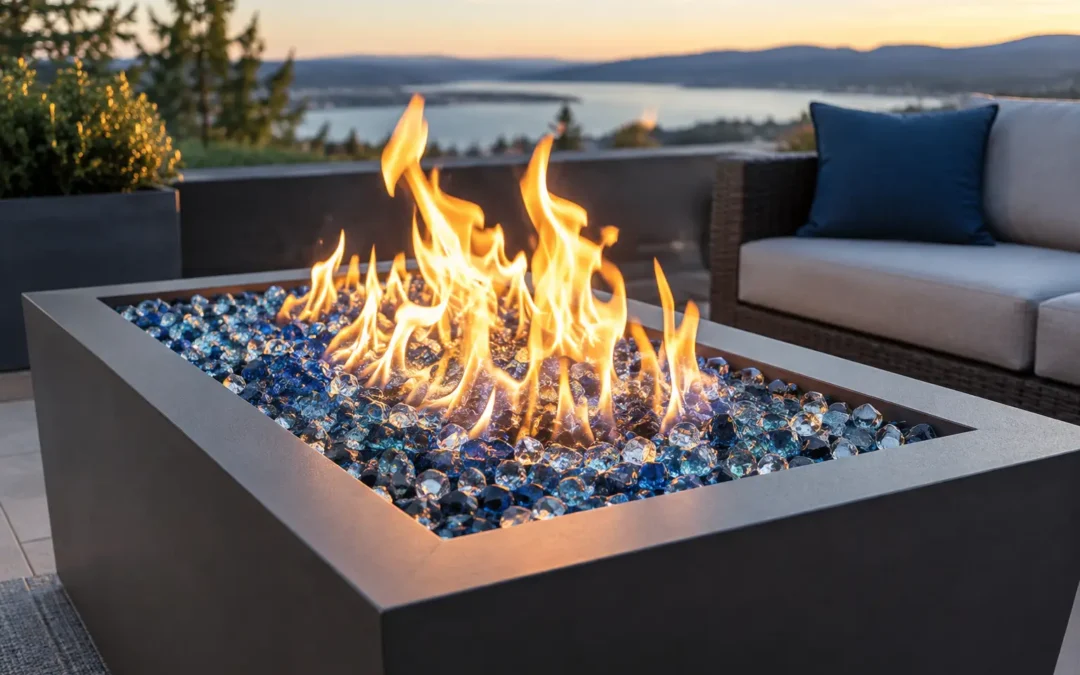
A successful fire glass media review begins where many backyard projects go wrong: with the recognition that decorative media is not an afterthought. The glass is the visible foundation beneath the flame. It influences the color, depth, and perceived quality of a fire bowl or fire pit just as much as the burner, vessel finish, and surrounding stone or tile.
For premium poolside and patio installations, fire glass should be selected as a design material and a functional component. The right choice creates a clean, layered flame presentation that complements the architecture. The wrong choice can look thin, inconsistent, or out of place before the feature is ever lit.
Fire Glass Media Review: What Defines Quality?
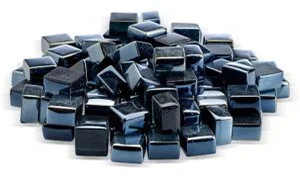
Fire glass is tempered glass manufactured for use in gas fire features. Unlike ordinary decorative glass, quality fire glass is designed to tolerate the high heat produced by a properly installed natural gas or propane burner. It does not burn, melt under normal operating conditions, or produce smoke and ash.
That basic description covers a wide range of products, however. The difference between budget glass and premium fire media often becomes clear in the details: how consistently it is sized, whether its edges are properly tumbled, how evenly the color is applied, and how cleanly it presents across the burner pan.
High-quality fire glass should arrive relatively clean, with minimal dust and broken fragments. Pieces should have softened edges rather than sharp, jagged profiles. This matters for safe handling during installation, but it also affects the finished appearance. Smooth, consistently shaped glass reflects flame light in a more controlled, refined way.
Color quality deserves equal attention. Some fire glass has color embedded throughout the material, while other options use reflective backing or surface treatments to create a brighter effect. Both can work beautifully, but the selection should suit the location and desired atmosphere. A bright reflective blend can give a compact tabletop bowl more visual energy. In a large square fire bowl, a deeper neutral glass may better support the architecture and let the flames take center stage.
The Best Fire Glass Type Depends on the Design
There is no single best fire glass for every project. The most effective media depends on the bowl shape, burner layout, viewing distance, and surrounding finishes.
Reflective fire glass
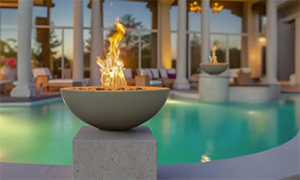
Reflective fire glass is a popular choice for homeowners who want a vivid, luminous display. Its mirrored or metallic backing catches the movement of the flame, creating added sparkle and depth. Blue, cobalt, aqua, and clear reflective glass often pair naturally with pool water, especially when the fire feature is meant to serve as a nighttime focal point.
The trade-off is that highly reflective glass can be visually busy in large quantities. On a minimalist patio with pale limestone, smooth stucco, and restrained planting, a dramatic reflective mix may compete with the rest of the design. It is often strongest when used intentionally, not simply because it looks striking in a product photo.
Non-reflective and luster finishes
Non-reflective fire glass has a quieter, more grounded appearance. Blacks, grays, bronze tones, and earth-inspired colors work well with contemporary masonry, dark porcelain tile, and natural stone. Luster finishes sit between matte and highly reflective options, offering a subtle sheen without a mirrored appearance.
These finishes are especially useful when the fire bowl itself is a custom color. A charcoal or bronze media bed can reinforce a powder-coated aluminum bowl finish without creating a hard visual break between the vessel and flame area.
Fire beads, diamonds, and larger decorative media
Standard fire glass is commonly offered in small, irregular pieces that cover a burner pan evenly. Fire beads, fire diamonds, and larger crushed-glass styles can create a more sculptural finish. They may be appropriate for display-oriented bowls or fire pits where the media remains visible during the day.
Larger media is not automatically better. Oversized pieces can leave more open space between them and may not conceal a burner pan as evenly as smaller glass. For broad burner areas, a layered approach often produces the strongest result: a stable base of standard fire glass with a limited amount of larger accent media across the surface.
Choose Size for Coverage, Not Just Appearance
Most premium fire glass installations use media around 1/4 inch in size. This scale offers dependable coverage, allows flames to move through the glass naturally, and works with a wide variety of burner pans and fire bowl configurations.
Smaller glass can look dense and polished, but it may also settle tightly around burner ports if the system is overloaded. Larger glass creates more texture but can expose more of the burner pan, particularly in shallow applications. The appropriate size is therefore tied to the depth of the media tray and the design of the burner system.
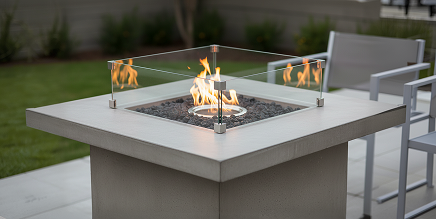
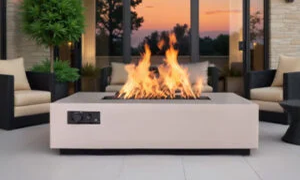
For a rectangular fire pit, consistent media coverage is especially important because the long flame line makes uneven areas easy to notice. For a square fire bowl, the goal is typically a balanced field of glass that frames the flame without making the burner assembly visible from common viewing angles.
Do not treat media depth as a way to hide every component beneath it. Too much glass can interfere with flame performance, restrict airflow, and make the burner harder to service. Follow the burner manufacturer’s media-depth guidance, then adjust the final surface layer carefully for an even finish.
Color Should Connect the Entire Outdoor Space
Fire glass color is often selected in isolation. A homeowner sees a compelling cobalt blue sample, or a contractor chooses black because it feels safe. A better approach is to evaluate the full material palette: pool tile, coping, patio surface, exterior paint, metal furniture, and the fire bowl finish.
Cool blue and aqua tones can create a direct relationship with water, but they do not have to match pool tile exactly. In many upscale settings, a tonal connection is more sophisticated than a literal match. For example, a smoky blue glass can complement blue waterline tile while still working with gray decking and dark aluminum furnishings.
Black fire glass is a reliable option for contemporary projects because it creates strong contrast beneath yellow-orange flames. Copper, bronze, and amber glass can bring warmth to travertine, desert palettes, and wood-accented patios. Clear glass offers a crisp, almost invisible daytime effect, then becomes bright and animated once the feature is lit.
When a custom fire bowl color is being specified, request or review glass samples beside the selected finish whenever possible. Lighting changes materials dramatically. A color that feels restrained indoors may become much brighter in direct sun or under warm landscape lighting.
Safety and Burner Compatibility Come First
Decorative media should never override the operating requirements of the fire feature. Use only media rated for gas fire applications, and confirm that it is compatible with the burner system. Fireplace logs, lava rock from an unknown source, aquarium gravel, and ordinary landscape stone are not interchangeable with fire glass.
A properly engineered burner is designed to distribute gas and produce an intentional flame pattern. Covering burner ports too heavily, filling the pan beyond its recommended depth, or mixing media that obstructs the system can lead to poor ignition and uneven flames. The result may look disappointing, but it can also create a service issue that was avoidable from the start.
In pool environments, fire glass also benefits from occasional inspection. Windblown debris, leaves, landscaping material, and residue from nearby water features can collect in the media bed. Keeping the glass clean protects its appearance and makes it easier to identify any burner or ignition concern.
A note on fire glass and lava rock
Lava rock remains useful in some installations as a base layer because it can help fill a deep burner pan economically. It is generally less decorative than fire glass and should remain below the visible surface when a polished appearance is the priority.
This approach depends on the burner pan depth and manufacturer requirements. A shallow bowl may need fire glass alone. A deeper fire pit may accommodate a lava-rock base with a finishing layer of glass. The key is avoiding excessive depth and preserving proper burner operation.
What to Expect From Maintenance
Fire glass is low-maintenance, not maintenance-free. In a covered or protected fire feature, it may need little more than an occasional visual check. In an open poolside setting, cleaning is more frequent because dust, pollen, leaves, and moisture can dull the surface over time.
Allow the feature to cool completely before touching the media. Remove loose debris by hand or with a gentle vacuum method that will not pull glass into the equipment. If washing is appropriate for the installation, remove the media and let it dry fully before returning it to the burner pan. Never add wet glass to a fire feature.
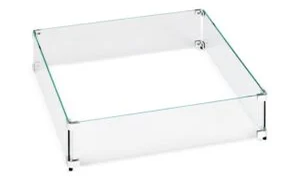
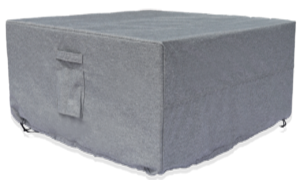
For homeowners who want the polished appearance of fire glass with less seasonal upkeep, a properly fitted burner cover and protective cover are practical accessories. They help keep the media bed cleaner when the feature is not in use and preserve the finished look of the installation.
Is Premium Fire Glass Worth It?
For a temporary patio fire pit, entry-level media may be sufficient. For a custom poolscape, architectural fire bowl, or professionally designed backyard, premium fire glass is usually worth the additional consideration. It is one of the most visible details in the feature and one of the easiest places for a project to lose its sense of quality.
USA Fire Bowls pairs design-focused fire media options with handcrafted fire features built for lasting outdoor use. The strongest selection is not necessarily the brightest or most expensive glass. It is the one that supports the burner, suits the vessel, and makes the entire outdoor setting look intentional long after the flames are off.
Treat fire glass as part of the finished architecture of the space. When its color, scale, and performance are chosen with care, it gives a fire feature the composed, high-end presence the rest of the project deserves.