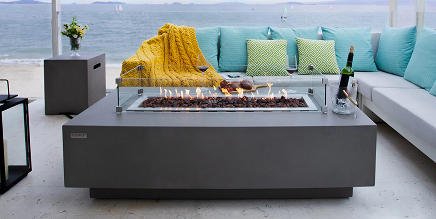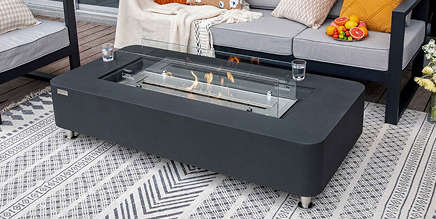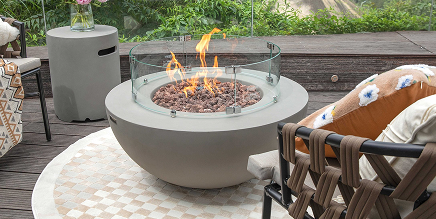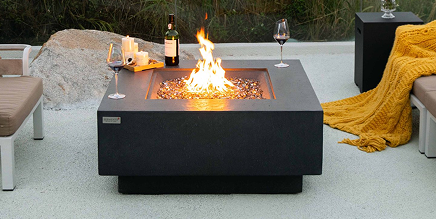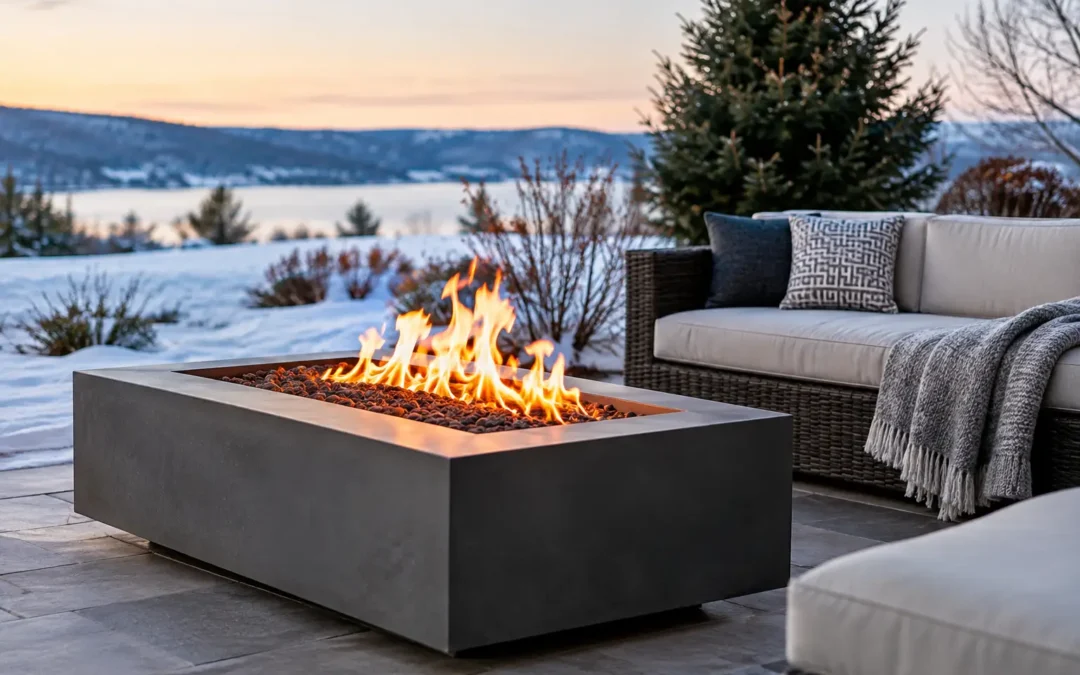
A premium fire bowl should look as refined in February as it does on the first warm evening of spring. Knowing how to winterize outdoor fire features protects the finish, burner system, ignition components, and surrounding hardscape from unnecessary wear while your patio sees less use. The right approach is not simply placing a cover over the unit. It is a deliberate seasonal shutdown that keeps moisture, debris, freezing temperatures, and dormant pests from becoming costly service issues.
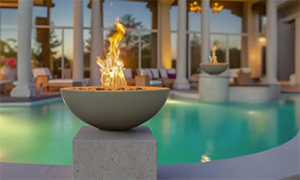
For homeowners with poolside fire bowls, built-in fire pits, or custom patio installations, winterization also preserves the visual details that make the feature part of the overall design. A powder-coated aluminum body and stainless-steel burner are built for outdoor exposure, but even premium materials perform best when they are cleaned, covered, and properly shut down.
How to Winterize Outdoor Fire Features Safely
Start only after the fire feature is completely cool. Choose a dry day if possible, particularly when you plan to remove fire glass or decorative media. The goal is to leave every component clean and dry before it is covered for an extended period.
First, turn the feature off at its normal control valve. Then shut off the dedicated gas supply valve serving the fire feature. If your installation includes a propane cylinder, close the cylinder valve fully. For built-in natural gas systems, do not disconnect hard-piped gas lines yourself. A licensed gas professional should handle any disconnection, repair, or winter shutdown procedure that goes beyond closing the designated shutoff valve.
If there is any smell of gas, visible damage to a line, an unreliable ignition sequence, or a burner that produces uneven flames, stop there. Schedule qualified service before covering the feature. Winter is an excellent time to correct a small performance issue before it becomes a spring installation delay.
Let the system cool, then clear the burner area
Once cool, remove leaves, mulch, twigs, and other loose debris from the bowl, pan, burner openings, and control area. Organic debris holds moisture against finished surfaces and can interfere with burner ports. In landscaped settings, this matters more than many owners realize: a few windblown leaves can trap water beneath a cover for months.
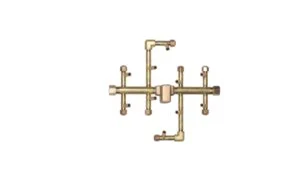
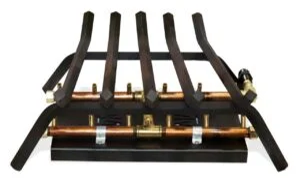
Use a soft brush or a dry, nonabrasive cloth around burner ports. Avoid wire brushes, sharp tools, and aggressive scraping. Those can damage finishes or alter the openings that distribute gas across the burner. Never insert objects into burner ports unless the manufacturer specifically directs you to do so.
Clean Fire Glass and Decorative Media Before Storage
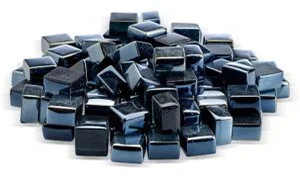
Fire glass is durable, but it is not self-cleaning. Ash, dust, pollen, and standing water can leave the media looking dull by spring, particularly around pools where minerals and chemical residue may be present. If your feature has lava rock, ceramic logs, or another decorative media, follow the same principle: clean gently and make sure it is dry before the winter cover goes on.
For many fire bowls, fire glass can remain in place if the unit will be protected by a properly fitted, weather-resistant cover and the bowl drains correctly. This is usually the most practical option for large installations. However, removing the media may be worthwhile in areas with heavy snow, frequent freeze-thaw cycles, or a history of wind-driven rain entering the feature.
When removing fire glass, wear gloves and place it in clean, durable containers. Keep colors and blends separate if the installation uses a custom mix. Store the material indoors or in a dry, covered location where it cannot collect moisture or construction dust. Before reinstalling it in spring, inspect it for broken pieces, debris, or residue.
Do not wash fire glass and return it to the bowl while it is still damp. Moisture below the media is exactly what you are trying to avoid during a long seasonal shutdown.
Protect the Bowl Finish Without Trapping Moisture
A handcrafted aluminum fire bowl with a quality powder-coated finish is designed for exterior conditions, yet it still benefits from sensible care. Wash the exterior using mild soap, water, and a soft cloth, then rinse lightly and dry it completely. Skip abrasive pads, harsh solvents, bleach, and pressure washing at close range. These can compromise the finish or drive water where it does not belong.
Pay close attention to ledges, seams, drain paths, and the space beneath the fire bowl. Dirt buildup in these areas can hold water against the structure and make routine inspections harder. For fire features installed beside a pool, remove splashed mineral deposits promptly with a cleaner approved for the specific finish. Pool water chemistry can be tougher on exterior surfaces than ordinary rain.
A painted or powder-coated fire feature does not need an extra wax or coating unless the manufacturer recommends one. Adding an incompatible product may create streaking, attract dust, or complicate future touch-up work. Clean, dry, and covered is the standard to aim for.
Check drainage before the first freeze
Water needs a path out of the fire bowl and its surrounding enclosure. Inspect visible drain holes and make sure they are not blocked by fire glass, leaves, insects, or patio debris. If the feature repeatedly collects water, do not assume a cover alone will solve the problem. Standing water can affect burner components and may freeze in cold climates.
Built-in fire features require attention to the entire assembly, not only the visible bowl. A contractor or service technician can inspect concealed drainage, access panels, valves, and utility compartments if the system has experienced pooling water or poor ignition.
Use a Fitted Cover, Not a Loose Tarp
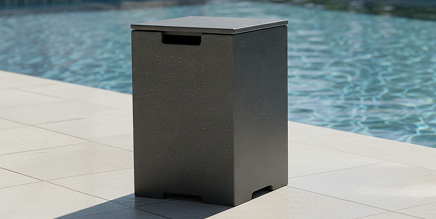
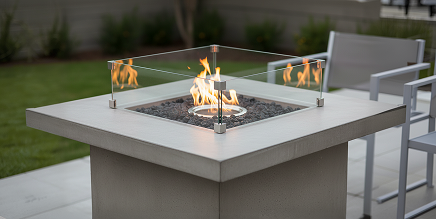
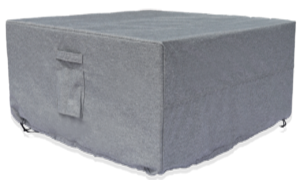
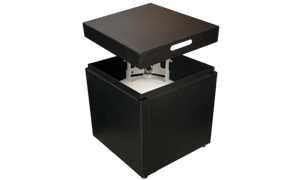
A fitted protective cover is one of the most valuable winter accessories for an outdoor fire feature. It helps keep rain, snow, dust, and landscape debris out of the burner area while preserving a cleaner presentation on the patio. For square and rectangular fire bowls, a cover sized for the actual footprint and height is far more effective than a loose tarp held down with furniture or stones.
A tarp can rub against finished edges, collect rainwater, and create a damp environment with little airflow. It may also shift in wind, exposing the burner and media at the worst possible time. A purpose-built cover should fit securely without pulling tightly across sharp corners or resting in a way that creates deep water pockets.
Before covering the feature, confirm that every surface is dry. If you live in a wet climate, lift the cover periodically during a stretch of dry weather to inspect for trapped moisture, leaves, and pest activity. This simple check is especially useful for vacation properties and homes where the outdoor living area is not used daily during winter.
Account for Your Climate and Installation Type
Winterization is not identical across the United States and Canada. In mild climates, the primary concerns may be rain, airborne debris, and infrequent cold snaps. In snowy or freezing regions, water management becomes the priority. Snow should not be allowed to accumulate heavily on a cover for extended periods, particularly if the cover can sag into the bowl.
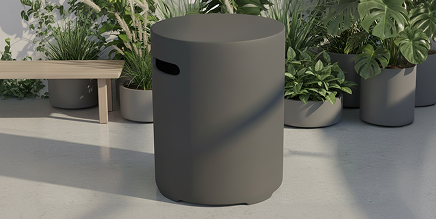
For propane fire features, confirm that the cylinder is upright, secured, and stored in a well-ventilated outdoor location. Never place a propane cylinder in a garage, basement, shed, or other enclosed space. Local codes and the propane supplier’s instructions should guide storage practices.
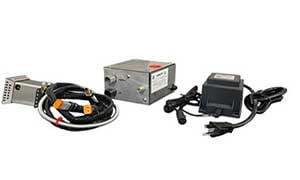
For natural gas fire features, a closed shutoff valve is often sufficient for a properly installed system. Still, exposed plumbing, electronic ignition components, and control assemblies may need a professional review in severe climates. If your pool is being winterized at the same time, coordinate the fire feature inspection with the pool contractor so access panels, drainage areas, and surrounding finishes are addressed as one outdoor system.
Plan a Spring Restart Before You Need the Flame
Winterization works best when it makes reopening easy. Keep a brief record of what you removed, what you noticed, and whether the feature needs service before the next season. Photographs of the media layout and burner area can be useful for custom installations, especially where flame appearance and design symmetry matter.
When warm weather returns, remove the cover, clear any debris, inspect the finish and burner, and confirm that the media is dry and correctly positioned. Open the gas supply only after the system has been checked. If ignition is delayed, flames look uneven, or you suspect a blockage, call a qualified professional rather than repeatedly attempting to light the unit.
A well-maintained fire feature does more than survive winter. It remains ready to bring proportion, warmth, and a finished architectural presence back to the pool deck or patio the moment outdoor entertaining returns.