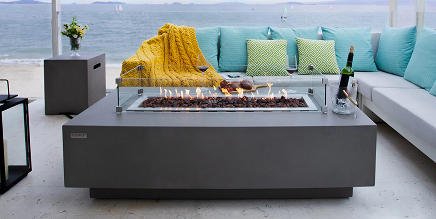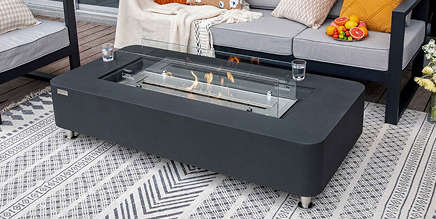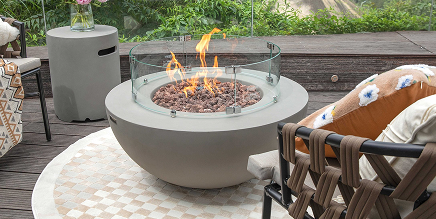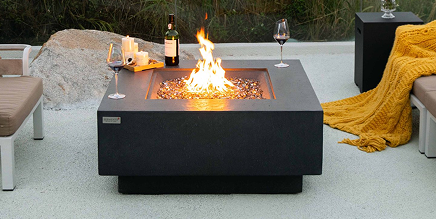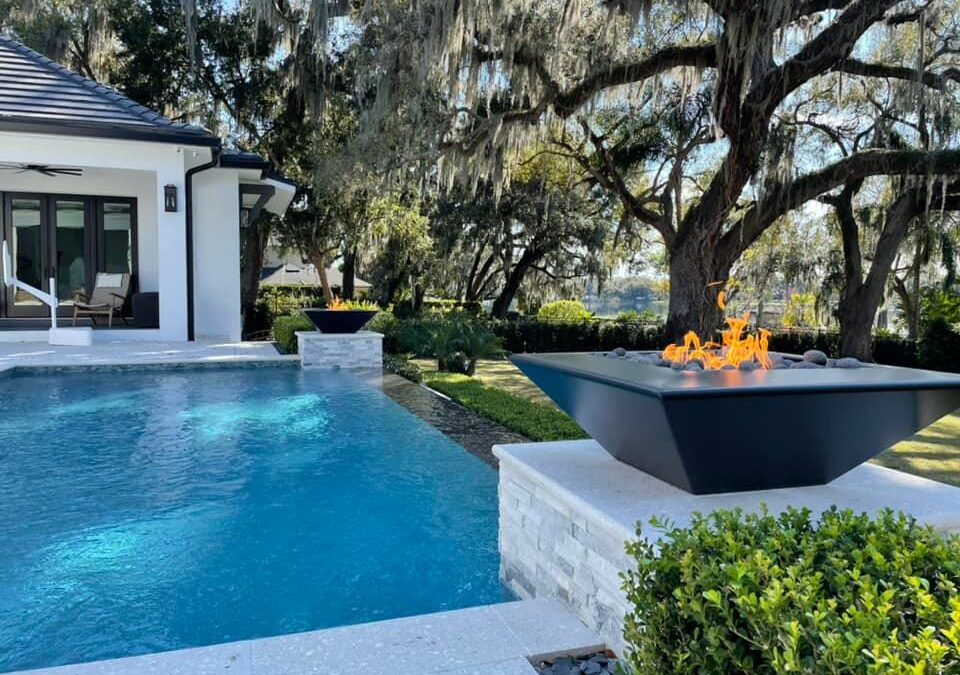
A fire bowl can make a pool deck feel finished in a way furniture and planting alone rarely do. The right piece adds warmth, structure, and movement after dark. This luxury outdoor fire bowl guide is built for homeowners and design professionals who want more than a decorative accent – they want a fire feature that belongs in a carefully designed outdoor environment.
At the luxury end of the market, the decision is rarely about heat output alone. It is about proportion, material integrity, finish quality, flame presentation, and how the bowl relates to water, hardscape, and architecture. A fire bowl that looks impressive in a product photo can still feel out of place once installed if the scale is wrong or the finish fights with surrounding stone and tile.
What separates a luxury fire bowl from a basic one
The difference usually starts with construction. Premium fire bowls are built from materials that hold up in demanding outdoor conditions, especially around pools where moisture, chemical exposure, and sun are constant factors. Aluminum and stainless steel are often preferred because they offer long-term durability without the weight and cracking concerns that can come with lower-grade cast materials or decorative composites.
Craftsmanship matters just as much as raw material. A luxury bowl should have clean lines, a well-finished surface, and a burner system that performs consistently. In upscale settings, small details stand out. Uneven paint, shallow color, low-grade burner components, or a weak flame pattern can cheapen the entire space.
Customization is another clear dividing line. Higher-end projects often need a bowl to coordinate with coping, veneer, plaster tones, or patio finishes. Standard black or copper options can work, but custom color matching and finish flexibility are what allow a fire feature to feel integrated rather than added later.
How to use this luxury outdoor fire bowl guide for your space
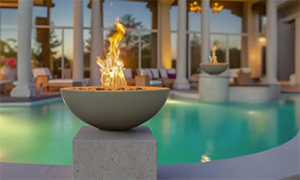
Start with the setting, not the product. A fire bowl should respond to the outdoor environment around it. On a pool project, that may mean placing paired bowls on columns or integrating them at key visual endpoints. On a patio, it may mean using a single statement bowl to anchor a seating axis or define a transition between lounge and dining areas.
Think about the bowl as part of the architecture. If the home has strong modern lines, a sleek and restrained profile usually performs better than a heavily ornamental shape. If the landscape leans more traditional or Mediterranean, a softer silhouette may feel more natural. Luxury design is often about restraint. The bowl should add drama through flame and craftsmanship, not visual clutter.
Size and scale come first
One of the most common mistakes in high-end outdoor design is choosing a bowl that is too small for the setting. Large patios, expansive pool decks, and broad stair entries need visual weight. A fire bowl that disappears against wide-format pavers or oversized columns will not create the intended effect.
At the same time, bigger is not always better. A bowl that overwhelms a compact courtyard or narrow water feature can make the space feel crowded. The correct scale depends on viewing distance, surrounding elevations, and whether the bowl is meant to be a focal point or a supporting feature.
If the bowl will sit on a column or pedestal, treat the full assembly as one composition. The bowl diameter, base width, and overall height should feel balanced from every major sightline, especially from inside the home where many fire features are first appreciated.
Fuel type affects more than convenience
For most luxury installations, the choice comes down to natural gas or propane. Natural gas is often preferred for permanent residential projects because it offers a steady fuel source and reduces the need for tank access and replacement. It is generally the cleaner solution for built-in designs where the fire bowl is part of the hardscape plan.
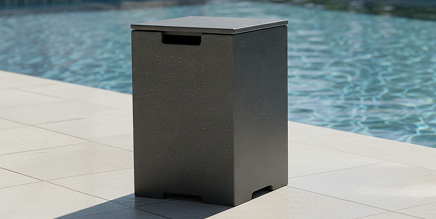
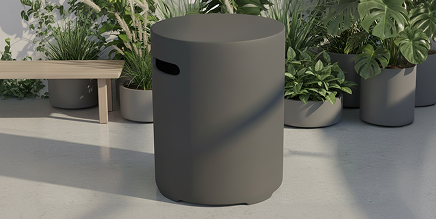
Propane can be practical where gas lines are not available, but it requires thoughtful concealment and service access. In premium settings, visible compromises tend to stand out. If propane is necessary, the design should account for tank storage from the beginning rather than treating it as an afterthought.
The burner system also matters. A luxury bowl should produce a full, attractive flame pattern, not a thin ring of fire that looks underpowered at night. The ignition method, shutoff access, and component quality all influence long-term satisfaction.
Placement decisions that change the final result
Placement is where aesthetics and safety meet. Around pools, fire bowls often work best when they frame a view, mark the corners of a raised beam, or create rhythm along a linear edge. They should feel intentional from both close range and across the yard.
On patios and landscape walls, spacing becomes critical. If bowls are too close together, they compete visually. If they are too far apart, they lose their relationship. In many projects, symmetry helps, but not always. A single well-placed bowl can be more compelling than a forced pair.
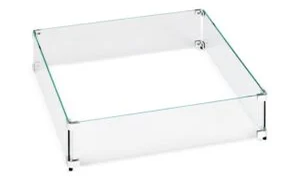
Wind exposure is another practical concern. Open sites, hillside properties, and coastal conditions can affect flame stability. A bowl may need a flame guard or a slightly more protected position to perform well. This is where experience matters, because a beautiful specification on paper still has to function in the actual environment.
Finishes should coordinate, not merely match
A refined outdoor space rarely relies on exact matching across every surface. Instead, it uses coordinated tones and textures to create depth. The same principle applies to fire bowls. A custom finish that relates to nearby stone, tile, or metal accents often looks more sophisticated than trying to copy one exact material perfectly.
Warm earth tones can complement travertine, natural stone, and desert-influenced landscapes. Darker charcoal and black finishes work well in contemporary settings with strong contrast and clean geometry. Metallic tones can add richness, but they should be used carefully. In some environments they look elevated. In others they can read as decorative rather than architectural.
This is one reason handcrafted, made-to-order options carry real value. They allow the fire bowl to support the broader design language instead of forcing the design to accommodate a stock finish.
Features worth paying for and features that are situational
In a premium fire bowl, some upgrades are worth prioritizing almost every time. Durable metal construction, quality burners, dependable ignition, and finish customization have a direct effect on performance and appearance. These are not cosmetic extras. They are the foundation of the product.
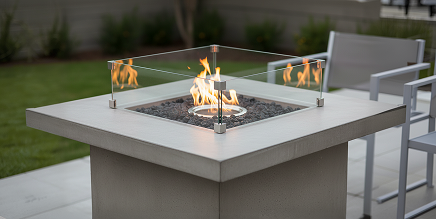
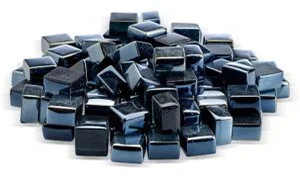
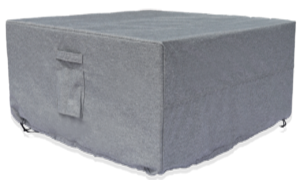
Other features depend on the project. Flame guards make sense in wind-prone areas or settings with heavy circulation. Burner covers and protective covers are useful when the bowl will sit exposed between uses. Fire glass can sharpen the final presentation, but the style and color should be selected with restraint. Too much sparkle or a trendy color can date a high-end installation quickly.
For trade professionals, compatibility matters as well. A well-designed product line should make it easier to specify matching components and accessories without improvising in the field.
Buying for a new build versus upgrading an existing backyard
New construction gives you the cleanest path to a fully integrated result. Gas lines, electrical planning, bowl placement, and finish coordination can all be addressed early, which usually leads to a cleaner installation and better visual balance.
Retrofitting an existing patio or pool is still very achievable, but it requires more discipline. You may be working around established utilities, fixed hardscape dimensions, or finish materials that are no longer available. In those cases, customization becomes even more valuable because it helps bridge the gap between new fire features and an older outdoor environment.
Homeowners often focus on appearance first, while builders and designers think immediately about access, venting, line routing, and install conditions. The strongest projects respect both sides. The fire bowl should look exceptional and install without creating avoidable complications.
What to ask before you commit
Before choosing a bowl, ask how it will age in your climate, what the finish options really look like in outdoor light, and whether the burner system is built for dependable use over time. Ask whether the bowl can be tailored to your project rather than squeezed into a generic specification.
If you are working with a pool builder, landscape architect, or contractor, make sure the fire bowl is being considered as part of the full composition. It should not be a late-stage accessory choice. In premium outdoor design, the best fire features feel inevitable, as if the space was always meant to include them.
That is the real purpose of a luxury fire bowl – not just to add flame, but to give the landscape a stronger sense of finish, permanence, and evening presence. When the materials are right, the scale is right, and the design is handled with care, the result feels less like outdoor decor and more like architecture.