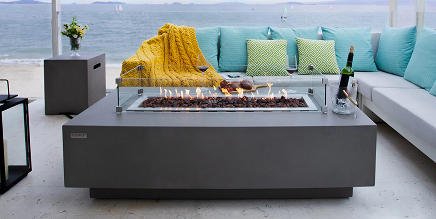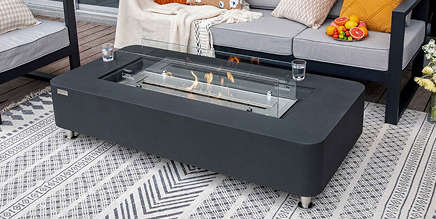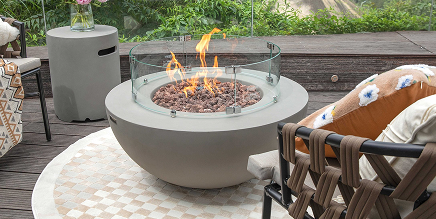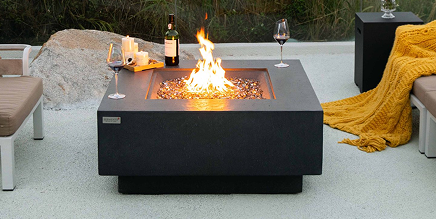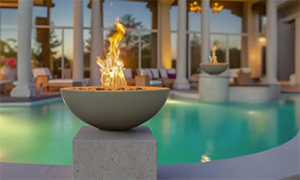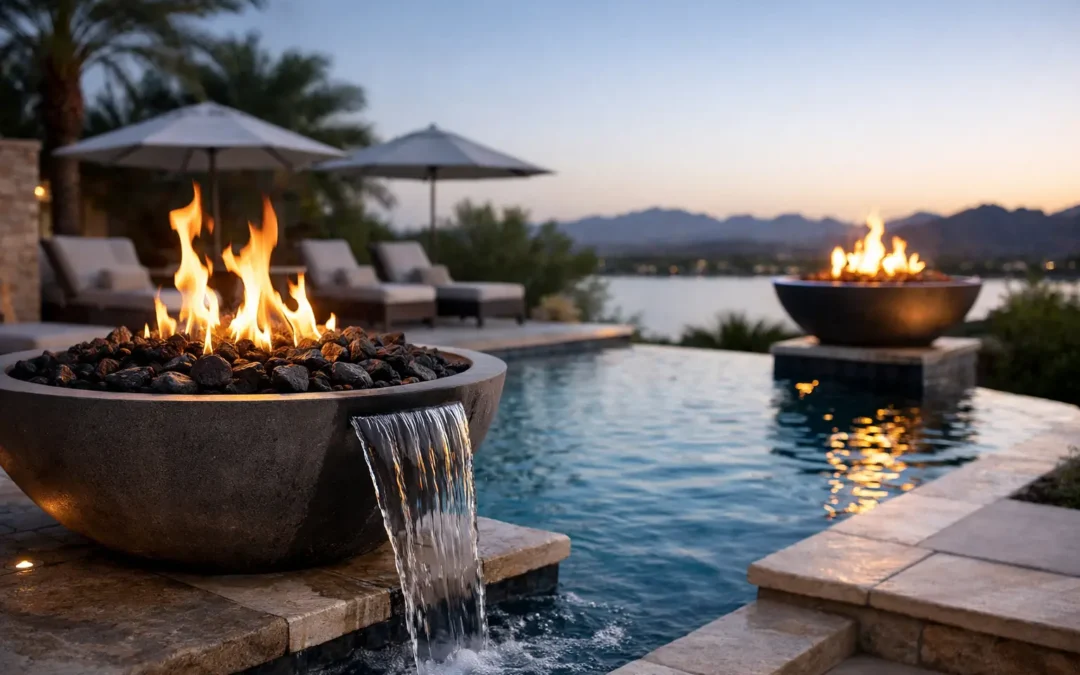
A fire feature at the waterline changes the entire look of a poolscape. The effect is clean, architectural, and immediate – but only when the fuel system, bowl construction, and placement are chosen correctly. For many high-end residential projects, pool fire bowls natural gas setups make the most sense because they offer reliable ignition, steady performance, and a more convenient ownership experience than propane.
Why pool fire bowls natural gas setups are so popular
Natural gas is often the preferred fuel source for permanent outdoor installations because it supports a true built-in design. There is no visible tank to work around, no routine tank refills to manage, and no compromise in the finished appearance of the pool area. For homeowners investing in a custom pool, outdoor kitchen, or full backyard renovation, that matters.
From a day-to-day standpoint, natural gas is simple. Once the line is properly installed, the fire bowl is ready when the space is being used. That consistency appeals to homeowners who entertain often, and it is equally valuable for pool builders and landscape professionals who need dependable performance after project completion.
There is also a design advantage. Fire bowls are usually selected as visual anchors – on columns, at pool entries, along raised bond beams, or framing a spa. A fixed natural gas connection helps preserve that clean, intentional layout. Nothing feels temporary.
What to look for in a natural gas pool fire bowl
The bowl itself should be treated as both a design element and a functional appliance. Premium projects demand more than a decorative shell with a burner dropped inside. Material quality, burner engineering, finish durability, and installation compatibility all affect how the feature performs over time.
Material quality matters more than most buyers expect
A pool environment is hard on outdoor products. Moisture, chemically treated water, heat, sun exposure, and airborne debris all work against longevity. That is why material selection deserves close attention.
Handcrafted aluminum and stainless-steel construction are strong choices for poolside fire bowls because they offer durability without the weight and cracking risk often associated with lower-grade cast materials or brittle decorative alternatives. In a premium installation, the structure needs to hold up not just for one season, but for years of exposure.
Finish quality matters too. A fire bowl often sits near tile, coping, stone veneer, stucco, or architectural concrete. If the finish looks generic or starts to fade unevenly, it will stand out for the wrong reasons. Custom color options can make a major difference when the goal is a cohesive outdoor design rather than a one-size-fits-all product dropped into place.
Burner performance shapes the flame presentation
Many buyers focus on bowl shape first, which is understandable, but the burner is what creates the visual experience. Flame height, distribution, and consistency depend on proper burner sizing and fuel delivery.
A well-built natural gas burner should provide an even flame pattern and be designed for outdoor exposure. In premium settings, the goal is rarely an oversized, chaotic flame. More often, the best result is controlled movement with enough height to read clearly across the pool while still feeling refined.
This is where professional sizing matters. A larger bowl does not automatically mean the biggest possible flame. The gas supply, burner dimensions, ignition method, and overall project conditions all need to work together.
Sizing pool fire bowls natural gas systems correctly
This is where many installations either succeed or become frustrating. Fire bowls do not operate well on guesswork. Natural gas pressure, BTU requirements, line sizing, and burner specifications all need to be aligned from the start.
If the gas line is undersized, the flame may appear weak or inconsistent. If multiple fire features are tied into the same system, the total demand has to be calculated correctly. A pair of fire bowls flanking a spa may look simple on the plan, but each unit adds fuel demand that must be accounted for along with any nearby fire pit, grill, or outdoor heater.
For homeowners, the practical takeaway is straightforward: treat the fire bowl as part of the pool and hardscape infrastructure, not as an accessory added at the end. For trade professionals, this is already familiar territory, but it is still one of the most important checkpoints in the entire build.
Ignition and control options
Some buyers prefer a manual ignition approach for simplicity. Others want electronic ignition for a more integrated experience, especially when coordinating multiple outdoor features. The right choice depends on project scope, utility setup, and how the client plans to use the space.
Electronic ignition can feel more premium in a high-end backyard, particularly when paired with convenient controls. Manual systems may be appropriate in certain applications where simplicity and serviceability are the priority. Neither option is universally better. It depends on the installation environment and the owner’s expectations.
Design considerations around the pool
A pool fire bowl should look as though it belongs to the architecture of the property. That sounds obvious, but many disappointing installations come down to proportion, finish mismatch, or poor placement.
Placement should support both symmetry and safety
Fire bowls are often installed in pairs because symmetry works well around pools, spas, and formal hardscape layouts. But symmetry should not override function. The placement needs to respect traffic flow, seating zones, sightlines from the house, and safe clearances from landscaping or structures.
At the same time, the bowl should have enough visual presence to read from key vantage points. A small bowl on a large column can feel underscaled. An oversized bowl on a narrow pedestal can look top-heavy. The best installations feel balanced from every angle, especially at night when fire becomes a focal point.
Coordinate finishes with surrounding materials
Luxury outdoor spaces depend on visual consistency. That does not mean every finish has to match exactly, but the fire bowl should clearly belong within the palette of the project. Stone, coping, waterline tile, stucco color, metal accents, and even furniture finishes all influence what will look right.
This is where customization becomes valuable. A handcrafted bowl with finish options is far easier to integrate into a design-forward environment than a mass-market unit with only a few standard looks. Designers and contractors know that small finish decisions often have an outsized effect on the final impression.
Installation realities buyers should not ignore
Natural gas fire bowls are convenient once installed, but the installation itself should be taken seriously. Gas line routing, burner setup, venting requirements where applicable, and code compliance all need professional attention. Around pools, there is even less room for shortcuts.
Buyers should also think about service access. A beautiful installation still needs to allow reasonable access to controls and components. Hiding everything completely may look clean on day one, but if future maintenance becomes difficult, that can create unnecessary cost and frustration.
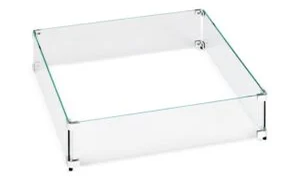
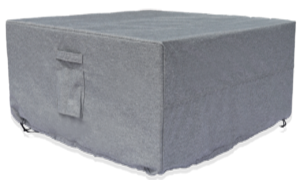
For custom projects, it is wise to plan accessories and finishing details early. Flame guards, burner covers, and protective covers can all support performance and appearance depending on the location and exposure conditions. Wind, debris, and seasonal use patterns should shape these decisions.
Natural gas versus propane for pool fire bowls
Propane has its place, especially where natural gas service is not available. It can work well in certain outdoor environments and offers flexibility in locations without plumbed gas lines. But for permanent poolside installations, natural gas usually delivers the cleaner long-term solution.
The biggest advantage is convenience. There is no tank management, no interruptions because a fuel source runs low, and no need to design around fuel storage. For upscale residential settings, that simplicity supports both better aesthetics and easier ownership.
The trade-off is that natural gas requires planning at the construction stage or a retrofit that may involve added labor. If a homeowner wants a truly built-in result and expects frequent use, that extra planning is often justified.
Who natural gas fire bowls make the most sense for
If the project includes a custom pool, a raised spa, a structured patio layout, or a broader backyard renovation, natural gas fire bowls are usually worth serious consideration. They fit especially well in homes where outdoor entertaining is a regular part of how the space is used.
They also make sense for professionals designing to a higher standard. Pool builders, landscape architects, and contractors need products that not only photograph well at project completion, but continue to perform and hold their appearance after installation. That is where handcrafted construction, premium materials, and thoughtful customization separate a purpose-built fire bowl from a generic outdoor product.
At USA Fire Bowls, that difference is central to the product itself – made-in-USA craftsmanship, durable materials, and custom finish flexibility are not extras. They are what allow a fire feature to belong in a high-end outdoor environment.
The right fire bowl should do more than add flame. It should complete the space, support the architecture, and feel like it was planned there from the beginning.