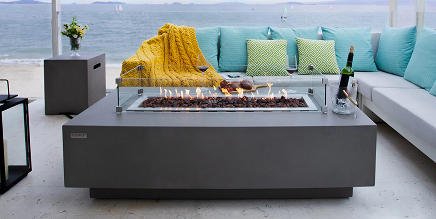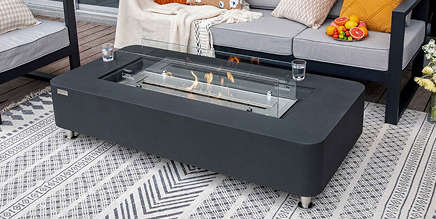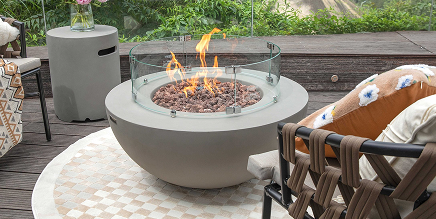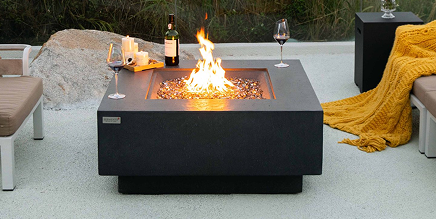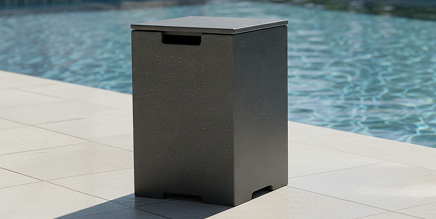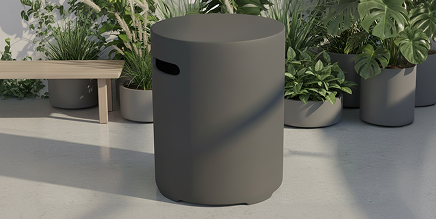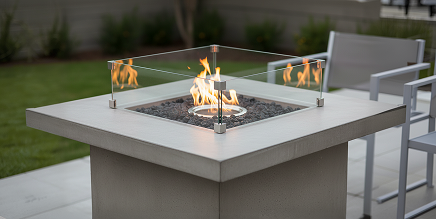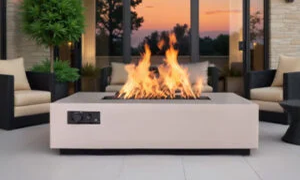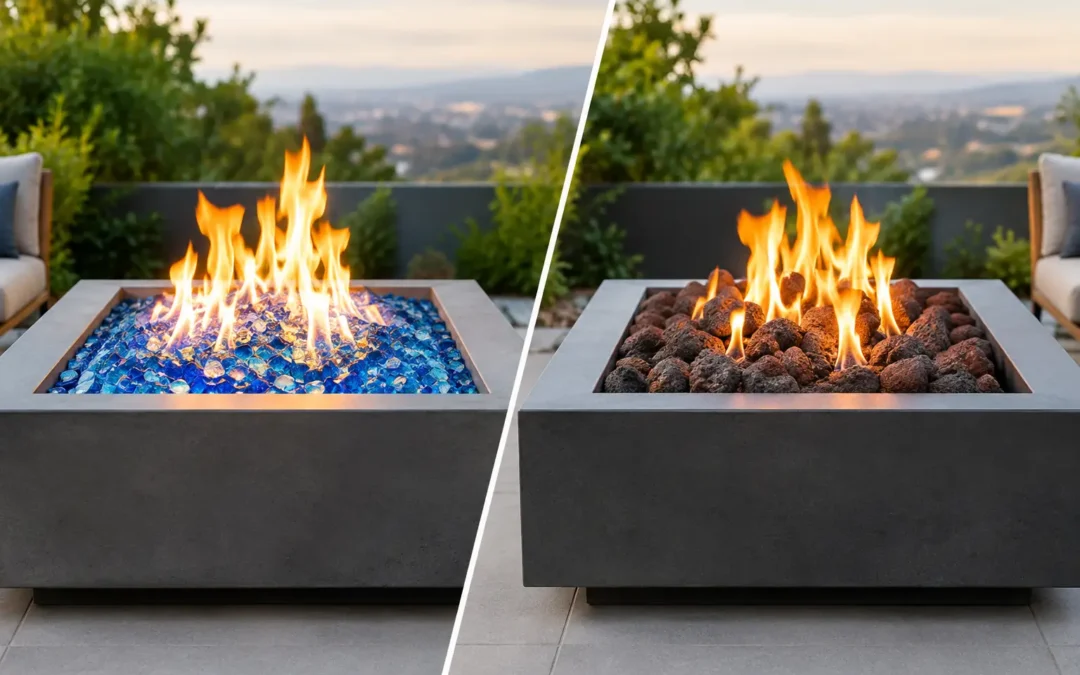
A premium fire feature is judged at eye level, where the flame meets the media beneath it. That is why the fire glass versus lava rock decision carries more weight than it may seem. Both materials can support a beautiful, properly configured gas fire bowl or fire pit, but they create distinctly different visual results, affect material quantities, and suit different project budgets.
For a poolside fire bowl, a contemporary patio centerpiece, or a custom landscape installation, the better choice depends on the intended finish. Fire glass is typically selected for its refined color, light reflection, and polished architectural character. Lava rock provides a natural, textured foundation that works especially well when a more organic appearance or greater media depth is desired.
What Fire Media Does in a Gas Fire Feature
Decorative media is not merely a finishing layer. It conceals the burner, fills the interior of the fire feature, and shapes the appearance of the flame. When specified and installed correctly, media allows gas to move through the burner system as designed while giving the fire bowl a finished, intentional presentation.
The media must be rated for fire-feature use. Ordinary decorative glass, landscape gravel, river rock, or stones collected from a property should never be substituted. Materials that retain moisture or are not formulated for high heat can crack, pop, or create an unsafe condition.
For premium installations, the burner, gas type, ignition system, media depth, and ventilation requirements should be considered as one system. A beautifully finished fire bowl still needs the correct burner configuration and installation practices to perform reliably.
Fire Glass Versus Lava Rock: The Visual Difference
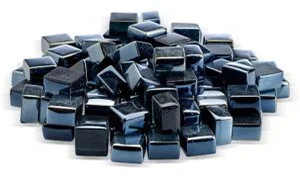
Fire glass gives a flame a crisp, elevated setting. Its reflective surface catches daylight, pool lighting, and the flame itself, creating more visual movement even when the fire feature is off. It is available in a broad range of colors, from clear and neutral tones to cobalt, bronze, black, and bold custom-inspired accents. That flexibility makes it especially useful when coordinating a fire bowl with tile, coping, plaster, powder-coated finishes, or outdoor furnishings.
Because the pieces are generally uniform and polished or tempered, fire glass fits clean-lined square and rectangular fire features particularly well. It reinforces a deliberate, design-forward look rather than reading as a purely natural landscape element. For homeowners and designers building a contemporary backyard, that precision is often the deciding factor.
Lava rock has a different appeal. Its porous, irregular texture introduces an earthy, relaxed character that works naturally alongside boulders, stacked stone, desert planting, rustic masonry, and less formal garden settings. It is usually dark in color and nonreflective, so the flame becomes the focal point rather than the media.
Neither material is automatically more attractive. A charcoal lava rock bed can be exactly right for a natural-stone patio, while reflective fire glass may be the finishing detail that brings a modern pool deck together. The strongest choice is the one that supports the larger material palette rather than competing with it.
Heat, Flame, and Day-to-Day Performance
Both fire glass and lava rock are made to withstand the heat generated by a properly designed gas fire feature. Fire glass is commonly tempered and heat-treated for this purpose. Lava rock is naturally heat resistant and has long been used as a base medium in gas fire applications.
The flame height and warmth of a fire bowl are driven primarily by burner design, BTU output, gas pressure, wind conditions, and proper media placement – not by an assumption that one decorative medium makes substantially more heat than the other. Do not select media as a substitute for sizing the burner correctly.
Lava rock’s porous structure means it can hold dust, debris, and moisture more readily than fire glass. In covered or protected settings, that may not be a major concern. In an exposed backyard, especially near trees or planting beds, it can require more occasional cleanup. Fire glass has a smooth surface that is generally easier to rinse or wipe clean once the feature is fully cool and the gas supply is off.
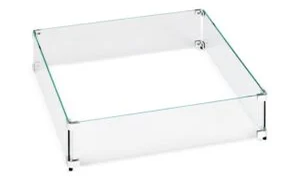
Wind deserves attention as well. No media can solve a poorly located fire feature in a consistently windy area. A flame guard may help stabilize the flame and improve performance in breezy conditions, but placement and burner selection remain more important than the media itself.
Cost, Coverage, and Layering Options
Lava rock is usually the more economical option, particularly when filling a deep fire bowl or a large fire pit. Its lower cost per volume makes it practical for installations requiring substantial fill beneath the visible surface.
Fire glass costs more, but it offers a higher-finish appearance with less visual bulk. A relatively shallow top layer can dramatically change the presentation of a fire feature. This is why many projects use lava rock as a base fill and fire glass as the visible finish layer. The approach can reduce material costs while preserving the polished appearance homeowners expect around a pool or entertaining area.
That layered approach must still follow the fire feature manufacturer’s media-depth guidance. Too much media can restrict gas flow, bury burner ports, or cause uneven flame patterns. Too little may leave the burner overly exposed and compromise the finished appearance. The goal is not to pack the bowl as full as possible. It is to achieve an even, burner-compatible bed at the recommended depth.
When calculating quantities, measure the interior dimensions of the media pan or bowl rather than the exterior dimensions of the fire feature. Consider the required media depth and subtract the space occupied by the burner assembly. This is a small planning step that helps prevent over-ordering and supports a cleaner installation.
Choosing Media for Poolside Fire Bowls
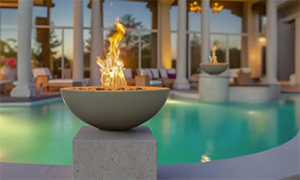
Pool environments tend to favor fire glass because it complements water, tile, and architectural finishes. Clear, aqua, cobalt, gray, black, and bronze glass can echo pool mosaics or create intentional contrast with pale coping and deck surfaces. During the day, the glass adds subtle texture. At night, it amplifies the visual drama of the flame without making the bowl look cluttered.
For a more restrained luxury aesthetic, neutral glass colors often provide the most longevity. Black or dark bronze glass can create strong flame contrast within a light-colored bowl. Clear or lighter reflective glass can make the media bed feel brighter, particularly when paired with darker powder-coated finishes. A custom fire bowl color and its media should be selected together, not as separate afterthoughts.
Lava rock remains a strong choice for poolside projects with natural stone waterfalls, rock grottos, organic planting plans, or rustic paving. It can also work well beneath a top layer of fire glass, where its texture is largely concealed but its economical fill capacity is useful.
At USA Fire Bowls, handcrafted aluminum fire bowls and custom finish options give designers a refined starting point. The media selection is where that foundation becomes specific to the home’s tile, stone, water features, and evening lighting plan.
Installation Details That Protect Performance
Start with a clean, dry fire media area and a burner that has been installed, tested, and approved according to its instructions and applicable local codes. Confirm that burner ports are clear before adding media. Spread the base material evenly, then distribute the finish layer gently so it does not pile up against or block the burner openings.
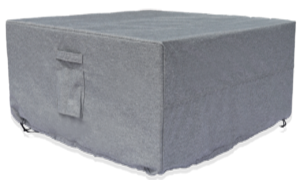
Avoid placing large pieces directly on delicate burner components. Do not use fire glass or lava rock to conceal access points that will be needed for ignition, service, or drainage. If a burner cover is used when the feature is off, allow the media area to cool completely first and keep the cover dry and clean.
For homeowners, a qualified gas professional should handle gas connections, pressure verification, and final leak testing. Pool builders and landscape contractors should coordinate the fire feature installation early with electrical, gas, hardscape, and drainage work. This prevents a premium bowl from becoming an afterthought squeezed into a difficult location.
Make the Finish Feel Intentional
The right media should make the fire feature feel integrated, not decorated. Choose fire glass when the project calls for clean geometry, color coordination, reflected light, and a polished poolside presence. Choose lava rock when texture, natural materials, greater fill depth, or budget efficiency lead the design.
A well-built fire bowl deserves media that supports its craftsmanship. Once the burner is sized correctly and the finish is chosen with the surrounding architecture in mind, the result is a flame feature that looks considered in daylight and exceptional after sunset.