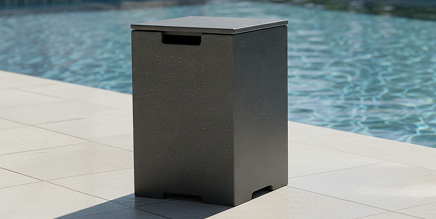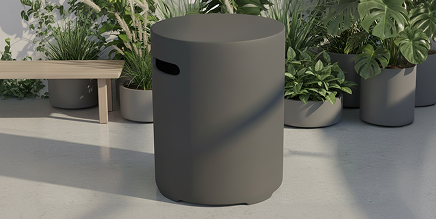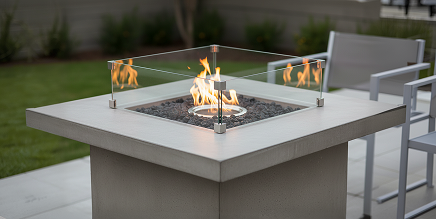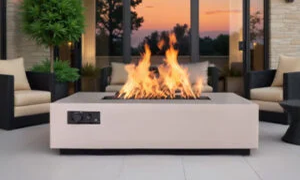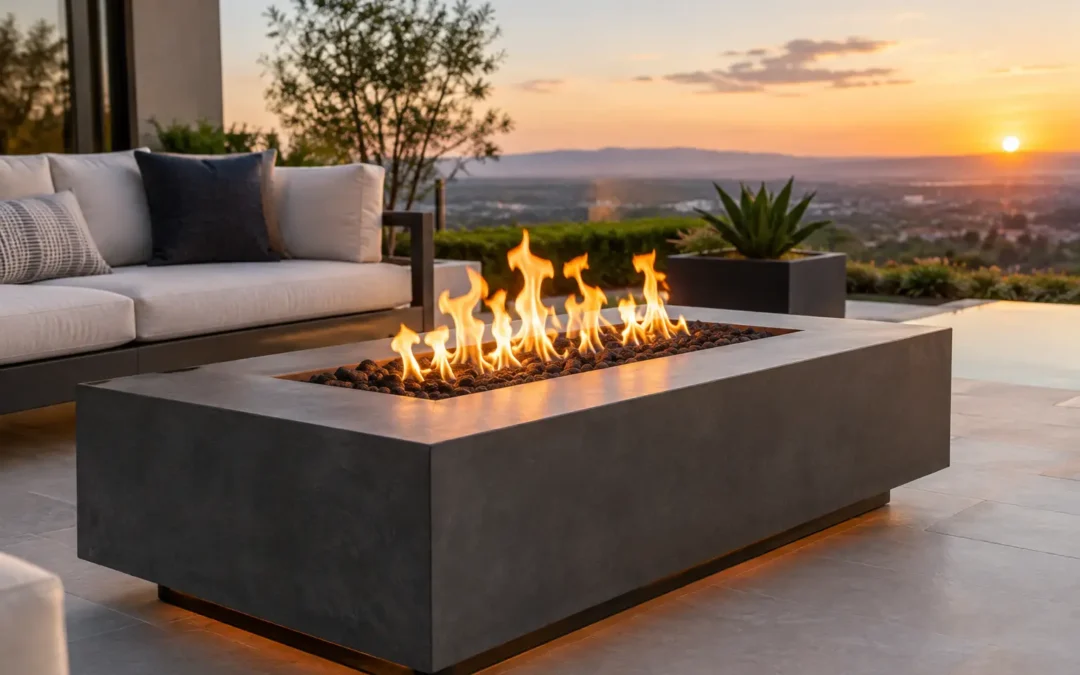
A fire feature beside a pool is no longer an accessory added after the hardscape is complete. It is increasingly treated as an architectural focal point from the first design conversation. The future of custom outdoor fire features is being shaped by that shift: affluent homeowners and trade professionals want fire elements that coordinate with the pool, stonework, furniture, lighting, and sightlines while remaining dependable through years of outdoor exposure.
For a luxury backyard, the question is not simply whether to add fire. It is where fire belongs, what it should frame, how it should perform, and whether every finish feels intentional. Customization, durable materials, and better coordination between design trades are moving outdoor fire features from decorative add-on to defining design element.
The Future of Custom Outdoor Fire Features Starts With Integration
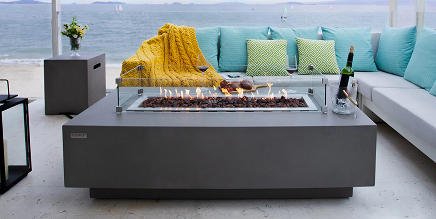
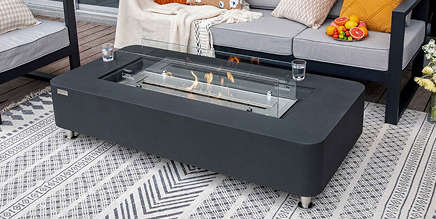
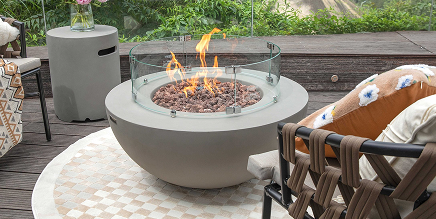
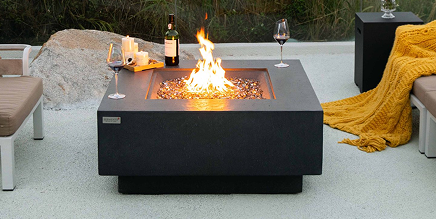
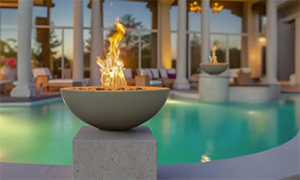
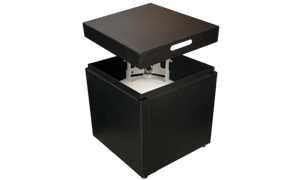
The most successful pool and patio projects use fire to create structure. A pair of square fire bowls can establish symmetry at a pool’s edge. A rectangle fire pit can define a conversation area on a large patio. A low-profile tabletop bowl can introduce warmth without interrupting a view. Each application has a different job, which is why one-size-fits-all fire products often fall short in high-end environments.
Future-focused designs will place even greater emphasis on visual integration. Pool builders and landscape designers are specifying bowl dimensions, burner configurations, and finishes early so the feature aligns with coping lines, raised walls, water elements, and adjacent seating. That planning matters most where a fire bowl is visible from indoors. From the kitchen, great room, or primary suite, its silhouette becomes part of the property’s daily visual experience.
Color matching will also carry more weight. Powder-coated aluminum bowls can be selected or customized to complement dark bronze window frames, charcoal stucco, warm limestone, blue-gray tile, or contemporary black accents. The goal is not always for the fire feature to disappear. Often, a carefully selected finish gives it enough contrast to read as a deliberate sculptural piece.
Scale Will Matter More Than Novelty
There will always be interest in dramatic flames and statement-making installations. Yet the projects that age best tend to favor proportion over spectacle. An oversized bowl can overwhelm a compact pool deck, while a fire pit that is too small may feel disconnected from an expansive seating arrangement.
Custom sizing gives designers control over this balance. It allows the body of the feature, the opening, and the flame pattern to support the space around them. For professionals, that means fewer compromises with predetermined dimensions. For homeowners, it means a finished backyard that feels composed rather than assembled from unrelated parts.
Materials Built for the Long View
A fire feature has to withstand far more than a few evenings of use. It faces heat, rain, sun, windblown debris, pool chemicals, and frequent temperature changes. As outdoor rooms become more finished and more valuable, buyers are paying closer attention to what sits beneath the surface of a polished exterior.
Aluminum and stainless steel are well suited to this direction. Aluminum offers a strong, lightweight foundation for handcrafted fire bowls and accepts durable powder-coated finishes. Stainless steel components, particularly burners, contribute to reliable flame performance and corrosion resistance. These are practical choices, but they are also design choices. Long-term material quality helps preserve clean lines, consistent color, and the refined appearance expected in a premium installation.
This is especially relevant around swimming pools. Chlorinated or saltwater environments can be demanding, and poolside components should be selected with exposure in mind. A properly specified bowl, burner, cover, and installation approach will not eliminate maintenance, but it can make routine care more straightforward and protect the investment.
Made-in-USA manufacturing will remain meaningful for buyers who value accountability, material transparency, and responsive customization. Handcrafted production also makes it easier to accommodate project-specific dimensions and finish requirements than a mass-market production model built around limited options.
Customization Is Becoming a Practical Requirement
Customization is sometimes described as a luxury. In outdoor fire design, it is increasingly a practical response to complex projects. Pool decks rarely follow a standard template. They include varied elevations, narrow setbacks, retaining walls, spillways, benches, planters, and carefully planned circulation paths.
A custom fire feature can be tailored to the dimensions of a cap, pedestal, or raised wall rather than forcing the surrounding construction to adapt to a stock product. Finish selection can be coordinated with architectural materials. Burner sizing can be selected for the desired flame presentation and the scale of the vessel. These decisions affect both the finished appearance and how naturally the feature belongs in the overall plan.
For a homeowner, customization may mean selecting a square fire bowl in a color that complements the pool tile. For a landscape architect, it may mean specifying exact dimensions across several features to maintain symmetry. For a pool builder, it can mean working with a manufacturer that understands how a fire bowl relates to plumbing, gas routing, and the final cap detail.
There are trade-offs. Greater customization generally requires more lead time and more early coordination than selecting a ready-to-ship model. A ready-to-ship fire bowl can be an excellent choice for a defined budget, a faster project schedule, or a design that works beautifully with available sizes and finishes. Custom fabrication makes the most sense when fit, finish, or architectural consistency cannot be compromised.
Cleaner Flame Presentation and Better Control
The future is not necessarily about adding unnecessary technology to every backyard. It is about making flame features easier to live with. Reliable ignition systems, thoughtfully sized burners, appropriate media, and accessible control locations can improve the day-to-day experience without distracting from the feature’s visual simplicity.
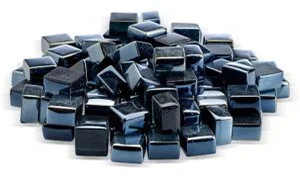
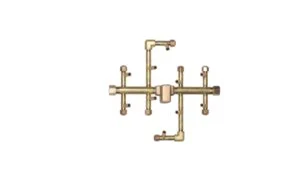
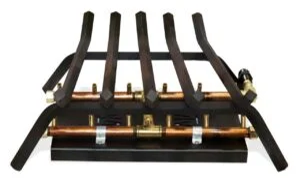
Flame appearance remains central. A burner should create a balanced presentation across the opening rather than a weak flame concentrated in one area. Fire glass can add color, depth, and reflection, especially at night when it catches both flame light and pool lighting. The best media choice depends on the palette of the project and the desired level of contrast. Dark glass can feel architectural and restrained, while reflective or colored glass can add a more expressive element.
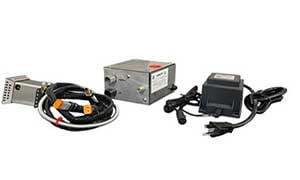
Control strategy should be decided before construction is complete. Some projects benefit from a simple manual key valve positioned nearby. Others call for electronic ignition and remote operation. The right choice depends on how the space will be used, local code requirements, access to power, and the owner’s expectations. Convenience is valuable, but it should never come at the expense of safe installation and serviceability.
Accessories Will Be Part of the Original Specification
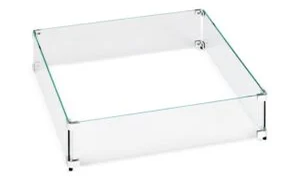
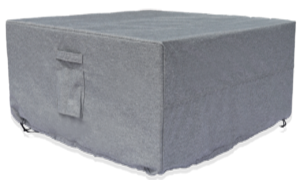
Covers, flame guards, burner covers, and protective covers are often treated as afterthoughts. That is changing. A well-designed fire feature needs a plan for the hours when it is not in use.
A burner cover can create a clean finished surface and help keep debris out of the fire media. A protective cover helps shield the bowl from weather and landscape debris. Flame guards may be appropriate where wind exposure or the installation layout calls for additional protection. Specifying these components from the beginning helps ensure they fit the feature and support the way the homeowner will actually maintain it.
Fire Features Will Continue to Shape How Backyards Are Used
Outdoor living has moved beyond the occasional weekend gathering. Homeowners are investing in spaces that support quiet evenings, family time, entertaining, and year-round visual enjoyment. Fire gives these spaces a center of gravity. Even when it is not lit, a handcrafted bowl or fire pit provides form and presence. When it is lit, it extends the usefulness of the patio after sunset and adds movement to still water, stone, and planting.
For trade professionals, the opportunity is to consider fire earlier and specify it with the same care given to tile, lighting, and furniture. For homeowners, the value lies in choosing a feature designed for the environment it will inhabit, not simply a product that happens to fit the available space.
The strongest outdoor fire designs will not chase every trend. They will use enduring materials, considered proportions, tailored finishes, and safe, serviceable components to create a setting that feels complete long after the first flame is lit.