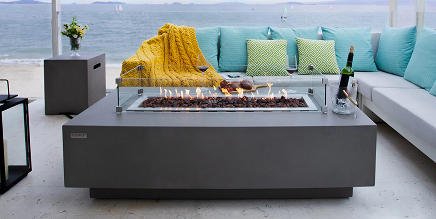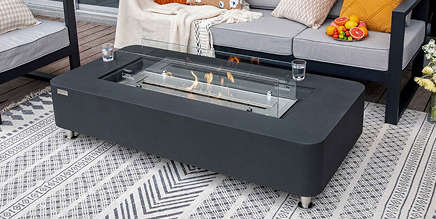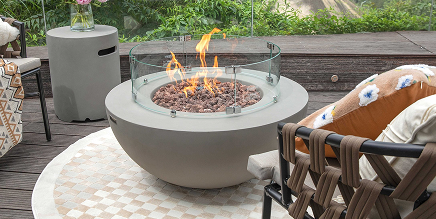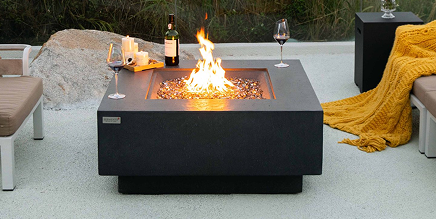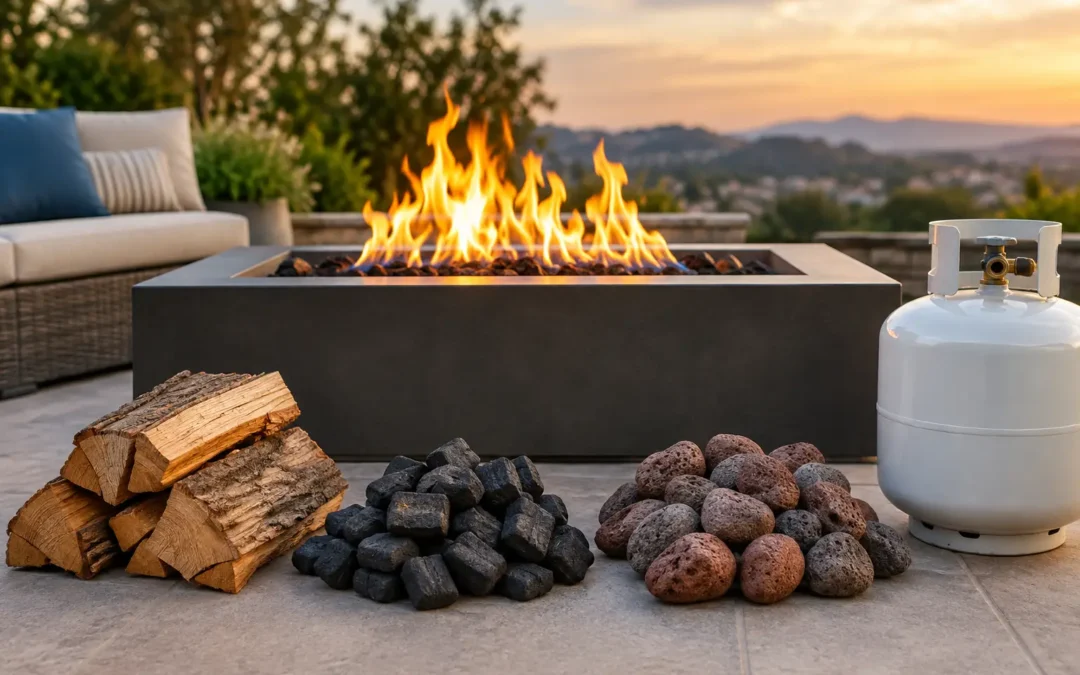
A fire feature can become the visual anchor of a pool deck or patio, but its flame is only as practical as the fuel system behind it. To choose fire pit fuel well, look beyond the initial flame effect. The right choice affects where the feature can sit, how cleanly it integrates with the landscape, what installation requires, and how often you will actually use it.
For a refined outdoor space, fuel should support the architecture rather than dictate it. A permanent square or rectangular fire bowl beside a pool has different needs than a movable patio fire pit used a few evenings each season. Start with the intended experience, then weigh utility access, maintenance expectations, local requirements, and the fire feature itself.
Choose Fire Pit Fuel Based on How You Will Use It
The simplest question is not which fuel burns best. It is whether you want a permanent amenity, a flexible entertaining feature, or the ritual of a traditional wood fire.
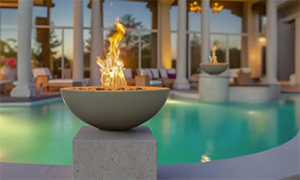
Natural gas is typically the strongest fit for a built-in, high-use fire bowl or fire pit. Once a correctly sized gas line is installed, the feature is ready whenever the patio is in use. There are no tanks to exchange, no wood to store, and no ash to remove. For pool builders, designers, and homeowners planning a complete backyard renovation, this convenience often justifies the added coordination during construction.
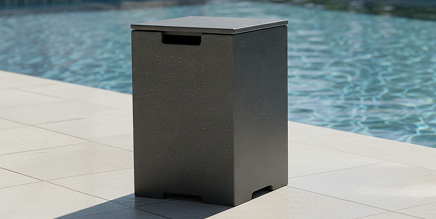
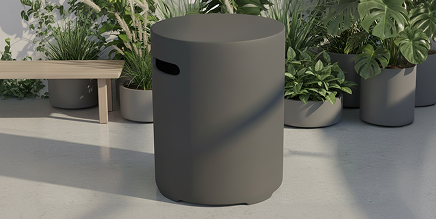
Propane delivers much of the same clean-burning, controlled flame experience without requiring a permanent gas line. It is especially useful where natural gas is unavailable or where a project needs more installation flexibility. A propane tank can be concealed within a properly designed enclosure or located remotely, depending on the fire feature and site plan. The trade-off is straightforward: tanks need periodic refilling or exchange, and concealment needs to be considered early so it does not compromise the finished design.
Wood remains appealing for its sound, aroma, and traditional campfire atmosphere. It also requires the most hands-on ownership. Smoke, sparks, ash, wood storage, and fire restrictions can make it a poor match for tightly designed pool patios, covered outdoor rooms, or neighborhoods with closely spaced homes. A wood-burning unit should be purpose-built for wood, with appropriate clearances and a noncombustible setting. It is never a fuel to introduce into a gas fire bowl.
Bioethanol is often considered because it does not require a gas line or propane tank. It can work in smaller decorative applications, but it is generally not the first choice for a substantial outdoor fire feature. Fuel storage, refill procedures, wind sensitivity, operating time, and heat output deserve close attention. For permanent, poolside fire features with a dramatic, reliable flame, gas systems are usually the more practical specification.
Natural Gas: The Permanent, Low-Maintenance Choice
Natural gas is well suited to premium outdoor environments because it supports a clean, composed installation. The fuel supply is continuous, ignition is simple, and flame height can be controlled through the appropriate valve or electronic ignition system. It also allows the fire feature to remain a true part of the landscape plan rather than an accessory that must be prepared before guests arrive.
The primary consideration is installation. A licensed professional should determine whether the existing gas meter and line can support the added BTU demand, particularly when the project includes a pool heater, outdoor kitchen, spa equipment, or multiple fire features. Pipe sizing, line length, elevation changes, and total connected load all matter. A line that is undersized can leave a large burner with a weak, disappointing flame.
Natural gas also rewards early planning. Running gas before decking, hardscape, and finished landscaping are complete is typically cleaner and more cost-effective than adding it later. For a new pool or patio project, coordinate the fuel line, electrical needs, drainage, and control location before final surfaces are installed.
Propane: Flexible Placement With Ongoing Fuel Management
Propane is a capable choice for fire bowls, especially on properties without natural gas service. It offers a bright, adjustable flame and can provide the polished appearance expected in a finished outdoor living space. With the tank properly hidden, most guests will see the fire feature, not the fuel source.
The practical difference is capacity. A standard propane cylinder has a limited run time, and larger fire features consume fuel more quickly than compact tabletop models. A homeowner who uses a modest fire pit occasionally may find tank management easy. For a large bowl beside a pool that is used for frequent entertaining, a larger remote tank or a dependable refill plan may be more appropriate.
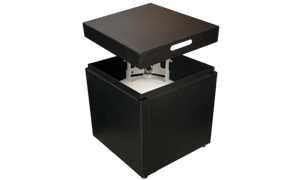
Tank access should be designed into the project. The enclosure needs appropriate ventilation, service access, and space for the tank without crowding valves or hoses. Do not select a fire feature first and treat tank placement as an afterthought. The best installations protect the clean lines of the patio while keeping service straightforward.
Wood: Best for Atmosphere, Not Every Backyard
Wood-burning fire pits offer an experience gas cannot fully duplicate. The crackle, scent, and changing character of a real wood fire are part of the appeal. For a larger property, a detached gathering area, or a homeowner who enjoys tending a fire, that experience may be the priority.
Still, wood introduces variables that luxury patio designs often aim to minimize. Smoke can drift across seating and into open doors. Embers can threaten nearby furnishings, landscaping, and pool equipment. Ash must be removed after the fire is completely cold, and seasoned firewood needs dry, accessible storage. Some municipalities, homeowners associations, and seasonal air-quality rules also limit when wood fires can be used.
If wood is the right emotional fit, dedicate a suitable area to it. Keep it separate from features that are designed for gas operation, and review local codes and manufacturer clearances before installation.
Match the Fuel to the Fire Feature Design
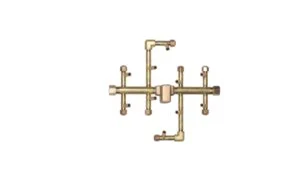
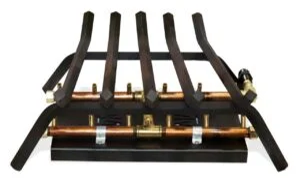
Fuel selection and fire feature design should be decided together. A gas fire bowl is engineered around its burner, media, ignition system, ventilation, and fuel type. The burner is not a generic component. Natural gas and propane require different burner configurations and orifices to produce a proper flame.
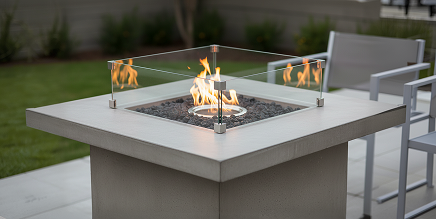
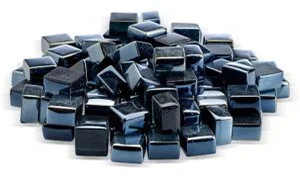
For decorative gas installations, fire glass, lava rock, or another approved media shapes the visual presentation while allowing gas to move correctly through the burner area. The media should complement the bowl finish, tile, coping, and adjacent stonework, but appearance cannot come before safe burner performance. Avoid overfilling the pan or using unapproved materials that interfere with flame distribution.
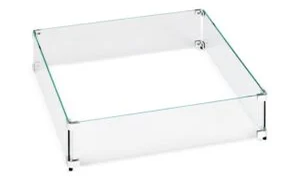
Wind is another design factor. An exposed rooftop deck or open pool terrace may need a flame guard or a more protected placement to preserve the flame pattern. Wind does not only affect appearance. It can influence comfort, ignition reliability, and the amount of heat guests feel while seated nearby.
Four Details to Confirm Before Installation
Before finalizing the fuel choice, confirm these site-specific details with the appropriate installer and local authority:
- Available utility capacity, including gas-line sizing and total BTU demand from other outdoor equipment.
- Local building, fire, and air-quality requirements, including permits, setbacks, and rules for wood burning.
- Required clearances from structures, pool equipment, furnishings, trees, overhead elements, and combustible surfaces.
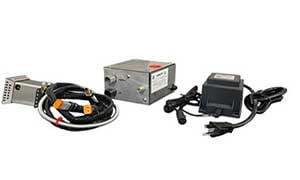
- The fire feature manufacturer’s approved fuel type, burner configuration, media, ignition components, and ventilation requirements.
These checks are particularly valuable for poolside projects. Water, electrical systems, gas piping, coping materials, and pedestrian traffic all meet in a relatively compact area. A thoughtful layout protects the visual calm of the space while giving installers room to build and service the feature correctly.
Consider Maintenance Before You Commit
Every fire pit fuel has a maintenance profile. Natural gas requires the least ongoing handling, but burners, ignition systems, media, and protective covers still deserve periodic inspection. Propane adds tank monitoring and hose or regulator checks. Wood demands the most routine attention, from fuel storage and ash removal to cleaning soot from nearby surfaces.
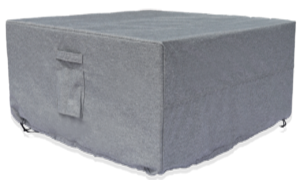
A quality cover is a practical investment for any outdoor fire feature. It helps keep leaves, irrigation overspray, debris, and poolside contaminants out of the burner area and preserves the finish between uses. For handcrafted aluminum fire bowls, regular care also helps maintain the tailored appearance that makes the feature feel integrated with the surrounding design.
The best fuel choice is the one that makes the fire feature easy to enjoy without compromising the way the backyard looks or functions. For permanent, design-forward patios, natural gas often offers the cleanest long-term solution. Where utility access is limited, propane can deliver comparable visual impact with sensible planning. Choose the system that fits the property, specify it correctly, and let the flame become a natural extension of the outdoor space.