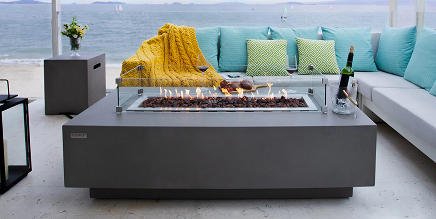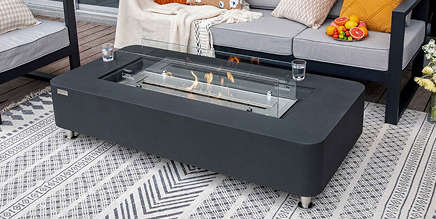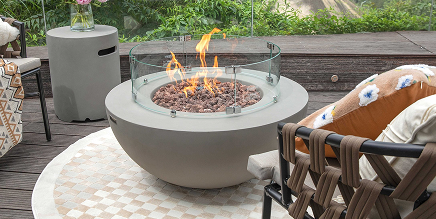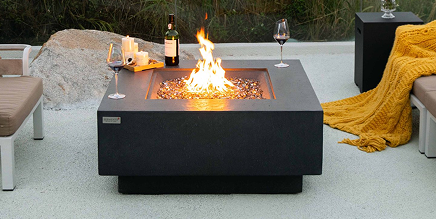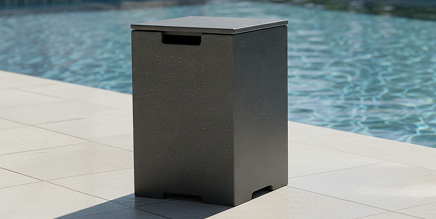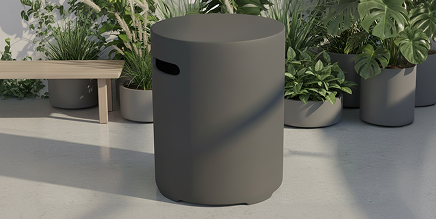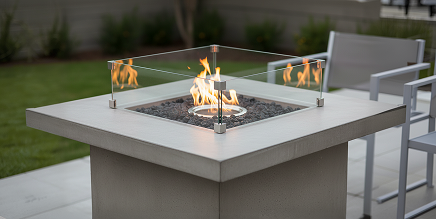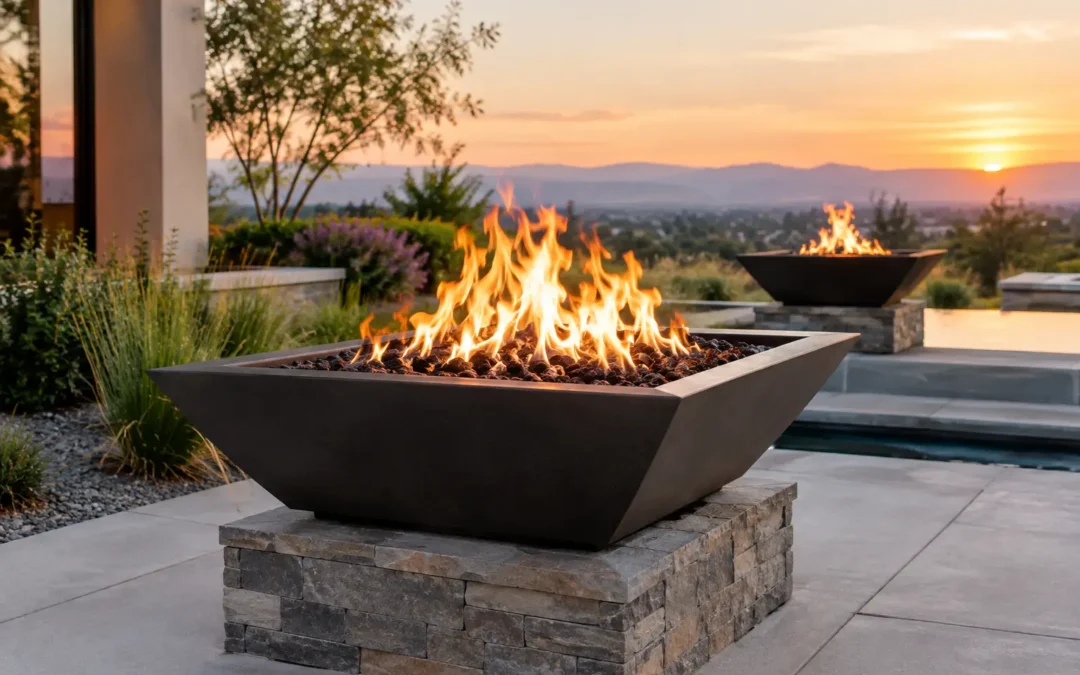
A fire feature can make a pool terrace feel composed and intentional, or it can become the one element that fights the architecture. A clear landscape architect fire feature specification protects the design vision while giving the pool builder, gas contractor, electrician, and installer the information needed to execute it correctly. For premium residential work, appearance is only the starting point. The specification must address proportion, fuel delivery, heat management, material performance, drainage, controls, and local code requirements.
The best result is not simply a larger flame. It is a fire feature that holds its visual presence from across the pool, relates to surrounding stone and tile, and continues to perform after years of sun, weather, and regular use.
Start With the Fire Feature’s Job in the Design
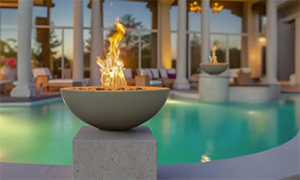
Before selecting a bowl, pit, or burner configuration, define what the feature is meant to accomplish. A pair of fire bowls at the far edge of a pool may frame a view and add vertical rhythm. A long rectangular fire pit can organize a lounge area, create a boundary between outdoor rooms, or bring warmth to a conversation zone. A square fire bowl on a pedestal may serve as a sculptural focal point even when it is not lit.
This distinction shapes scale. A feature intended to be viewed from inside the home or across a wide pool needs a stronger visual profile than one placed beside a pair of lounge chairs. Oversizing is not always the answer. A bowl that overwhelms a raised bond beam, blocks a view, or creates too much heat at nearby seating has missed the mark, regardless of its finish quality.
Set the intended viewing angles early. Include elevation drawings or renderings when the feature will sit on a wall, pedestal, deck edge, or pool structure. The drawing should establish finished deck elevation, vessel height, overall width, flame opening dimensions, and clearances from nearby furnishings, planting, rooflines, and structures.
Site Planning Comes Before Product Selection
A decorative fire feature relies on a site that can support it. Coordinate the location with the pool layout, structural conditions, circulation paths, wind exposure, and service access before a specific model is approved.
For poolside installations, the relationship between fire and water deserves particular attention. Fire bowls positioned on raised walls or pedestals must be supported by a properly designed structure, with provisions for the gas line, electrical conduit when applicable, and drainage. The bowl should appear integrated with the architecture, not perched on a surface that was never designed to carry it.
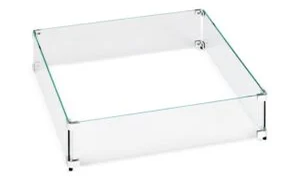
Wind is another frequent source of disappointment. An exposed hillside patio or coastal property may require a lower flame profile, a carefully located wind guard, or a different placement altogether. Flame guards can improve performance and help retain fire media, but they should be selected with the design in mind. Glass height, edge detail, reflections, and cleaning access all affect the finished appearance.
Specify practical access as well. A burner, ignition system, valve, or control module that cannot be reached for service creates an unnecessary future problem. Access panels should be integrated into the masonry, cladding, or equipment area with a finish and placement that respect the overall design.
Coordinate Clearances and Applicable Codes
Clearance requirements are not decorative details. They vary by product, fuel type, installation condition, local jurisdiction, and proximity to combustible materials. The project team should verify requirements with the feature manufacturer and the authority having jurisdiction before construction proceeds.
The specification should require review by qualified, licensed trades for gas piping, electrical work, and final connection. It should also state that installation must follow the manufacturer’s instructions and all applicable local codes. This avoids a common mistake: treating a fire bowl like site furniture when it is a gas-fired appliance with real infrastructure requirements.
Specify the Fuel System and Controls Clearly
Natural gas is often the preferred choice for permanent, high-use residential installations because it provides continuous fuel supply and consistent operation. Liquid propane can be appropriate where natural gas is unavailable or impractical, but it requires a thoughtful tank location, ventilation considerations, and a clear plan for refilling or exchange. Neither fuel is universally better. The right choice depends on the site, project use, utility availability, and client expectations.
Avoid leaving fuel type as an assumption in the drawings. State the approved fuel, anticipated BTU input, gas pressure requirements, pipe routing responsibility, shutoff valve location, and whether the feature requires a dedicated gas line. Confirm that the gas supply is sized for the feature and any other connected outdoor appliances, rather than sizing the line around the fire feature alone.
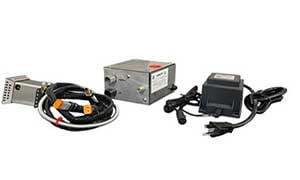
Controls should match how the client will actually use the space. A keyed valve may suit a straightforward installation where manual operation is acceptable. Electronic ignition and remote control systems offer greater convenience and can fit an upscale entertaining environment, particularly when several features are controlled together. They also add electrical coordination, weather-protected component placement, and commissioning requirements.
For automated systems, specify the control location and the desired user experience. The homeowner should not need to guess which switch operates which bowl or walk to a hidden equipment panel every time guests arrive. At turnover, require clear operating instructions and a demonstration of normal startup, shutdown, and safety procedures.
Materials Should Support the Setting and the Climate
Material selection is where visual refinement and long-term durability meet. Premium fire bowls commonly use aluminum vessels with a durable powder-coated finish, paired with stainless-steel burners and components. Aluminum offers an excellent balance for architectural fire bowls: it is lightweight relative to masonry or cast concrete, resists corrosion, and can be finished in colors that complement tile, stone, stucco, or metal accents.
The coating specification matters. Request a finish suitable for exterior exposure and identify the approved color or custom color match. A generic “black” can read dramatically differently beside charcoal porcelain, dark bronze window frames, or warm gray stone. For a design-driven project, provide a physical sample or approved color reference when possible.
Stainless steel burner components should be selected for outdoor use and matched to the fuel and burner configuration. In coastal areas, high-humidity regions, or locations with frequent pool chemical exposure, maintenance expectations should be discussed openly. No exterior finish is maintenance-free. Salt air, hard water, chlorine, leaf debris, and fire media dust can all affect appearance over time.
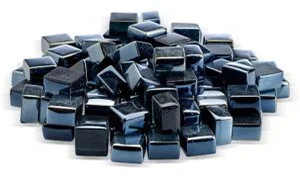
Fire media is part of the composition, not an afterthought. Fire glass produces a clean, reflective appearance and is available in colors that can either blend with the vessel or provide contrast. Lava rock creates a more organic look and may be suitable for naturalistic settings. Specify the media type, color, and depth according to the burner manufacturer’s recommendations so the flame performs as intended.
Write a Landscape Architect Fire Feature Specification That Builds Cleanly
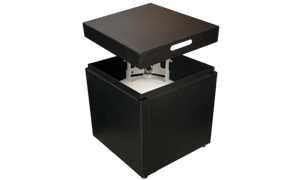
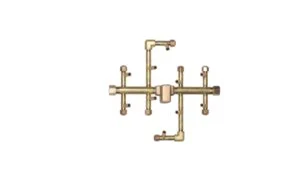
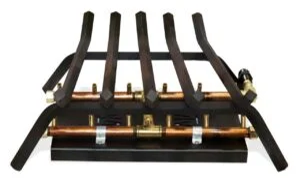
A useful specification gives the contractor a coordinated scope without attempting to replace manufacturer instructions or code review. It should identify the feature type, approved dimensions, finish, fuel, burner system, ignition method, fire media, flame guard if required, cover, and any accessories. It should also state who supplies each component and who is responsible for structural support, rough-in, final connection, and startup.
For custom work, include the submittal process. Require shop drawings that show overall dimensions, burner opening, connection locations, access requirements, mounting method, finish sample, and any custom color. This is especially valuable when a bowl must align with a bond beam cap, sit within a stone surround, or coordinate with multiple identical units across a large backyard.
Drainage deserves its own line item. A bowl or enclosure that collects standing water can compromise appearance and complicate service. The project should provide positive drainage around the feature, avoid trapping irrigation runoff, and follow the manufacturer’s requirements for any drainage openings or internal components. Do not assume that a cover alone resolves water-management issues.
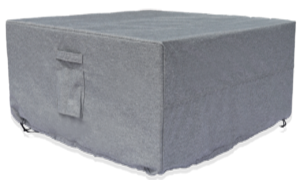
Require final inspection before the feature is handed over. The installer should confirm stable mounting, correct burner placement, proper fire media depth, leak testing, ignition operation, flame quality, drainage, and clear access to serviceable components. Protective covers should be included when the feature will be exposed between uses, particularly on seasonal properties or in areas with heavy debris.
Detail the Finish Beyond the Bowl
The strongest fire feature installations consider the surrounding assembly with the same care as the bowl itself. Coping, veneer, pedestal proportions, adjacent furniture, lighting temperature, and planting all influence how flame reads after dark. Ornamental grasses may look beautiful near a fire element in a rendering, but their mature size, dryness, and maintenance habits must be considered at installation.
A handcrafted, powder-coated aluminum fire bowl from a specialist such as USA Fire Bowls can provide the tailored color and clean geometry many high-end pool projects require. Its success, however, depends on the details around it: accurate rough-ins, thoughtful placement, compatible materials, and an installation team that respects both the appliance and the architecture.
When the feature is specified as a complete architectural element rather than a late-stage accessory, the final space feels quieter, more resolved, and far more memorable after sunset.