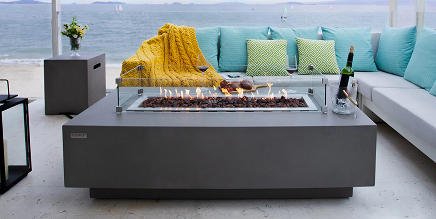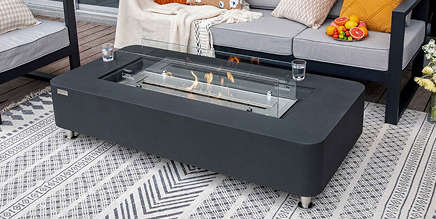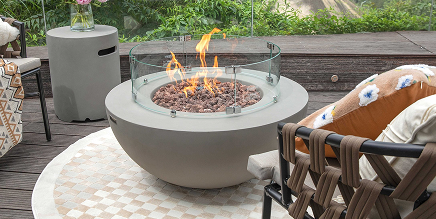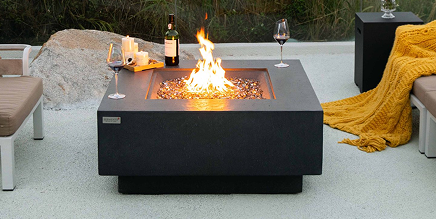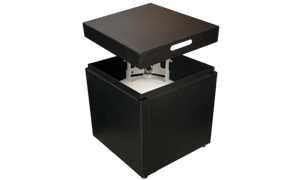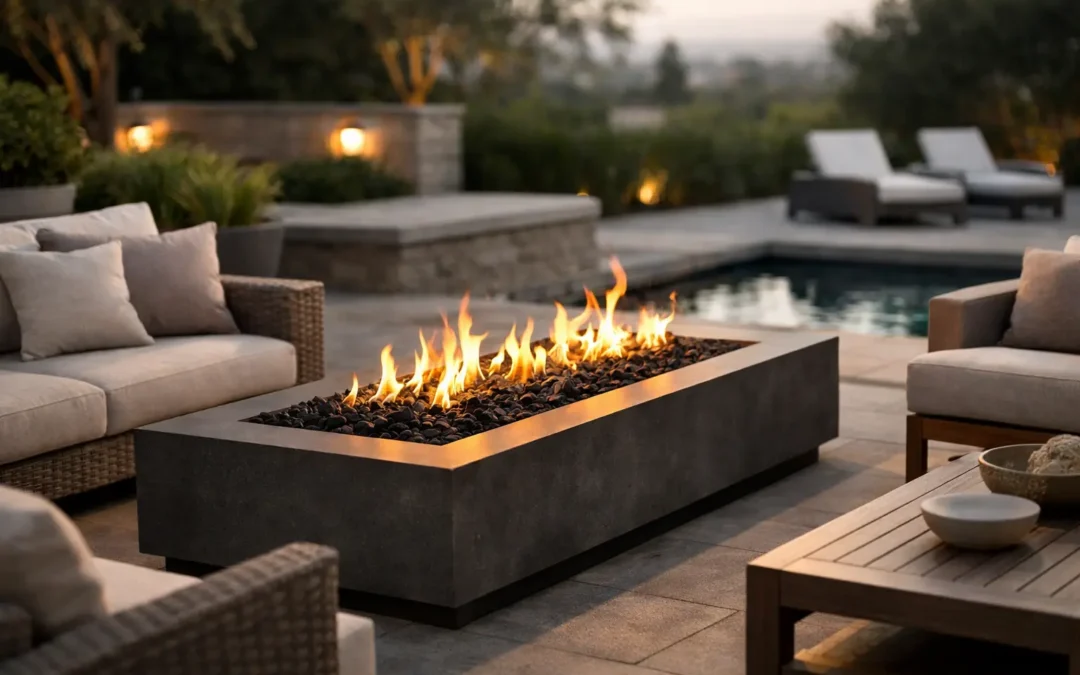
A rectangular fire feature can do more than provide warmth after sunset. It can establish an axis across a pool deck, define the edge of an outdoor lounge, or give a long dining terrace the visual weight it needs. This rectangular fire pit design guide focuses on the decisions that determine whether the finished installation feels intentional: scale, placement, construction, flame presentation, and the details that connect the feature to the rest of the property.
Rectangular Fire Pit Design Guide: Begin With the Site
The strongest rectangular fire pit designs respond to the geometry already present in the yard. Look first at the pool’s long edge, the lines of a covered patio, retaining walls, outdoor kitchens, and seating zones. A rectangle works especially well when the architecture is clean-lined or when the landscape needs a feature that visually stretches and anchors a broad space.
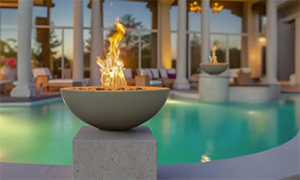
Placement should serve the way the area will actually be used. A low linear fire pit positioned opposite a pool can become a focal point from inside the home. Set along the perimeter of a lounge, it can create a refined boundary without closing off the view. In a conversation area, a centered fire table can organize seating, provided there is enough circulation space around it.
Avoid choosing a location solely because it appears open. Consider the walking path from the house, doors, pool access, furniture movement, prevailing wind, and the viewing angles from key rooms. A fire feature that sits directly in a major traffic route will feel inconvenient, no matter how well it photographs.
For poolside applications, maintain a disciplined relationship between water, fire, and surrounding hardscape. The feature should complement the pool’s scale without crowding the deck or interfering with safe access. Local codes, manufacturer requirements, and the specifications of the gas and electrical installation should guide all setback and clearance decisions.
Choose Proportions Before Choosing a Finish
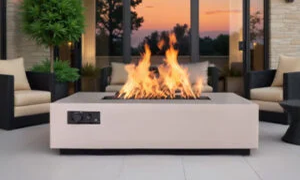
A rectangular fire pit is defined by its length-to-width relationship. That proportion influences both its visual character and the way people gather around it. A long, narrow profile typically reads as architectural and contemporary. It is ideal for lining up with a pool wall, a bench, or the edge of a large patio. A wider rectangle feels more like a traditional gathering piece and provides greater presence from every side.
Scale the feature to the outdoor room, not just to the available floor space. On an intimate courtyard patio, an oversized linear unit can make furniture placement feel forced. On a large pool deck, a small fire pit may look incidental and fail to hold its own against expansive paving and water.
As a practical starting point, map the proposed dimensions with tape or cardboard before ordering. Then place chairs where they will sit, open nearby doors, and walk the routes guests will use. This simple exercise often reveals whether the fire feature needs more length, less depth, or a different orientation.
Height is equally important. Lower fire pits preserve views across a pool or landscape and suit modern, resort-style seating. Taller structures can offer more visual mass, function as a partial divider, or coordinate with a raised spa wall. The trade-off is that taller sides can hide the flame from seated guests, particularly when deep cushions are involved.
Match the Fire Pit to Its Job
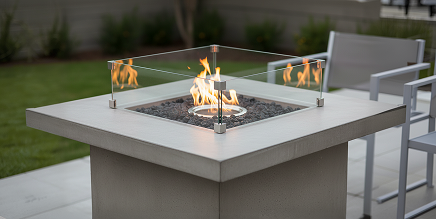
Decide early whether the feature is primarily decorative, social, or both. A decorative poolside fire pit may prioritize a long, elegant flame line visible from indoors. A social fire table needs a perimeter that comfortably accommodates seating and, in many cases, a usable ledge for drinks. A boundary feature beside a dining area may require a more contained flame presentation and a substantial base that reads as part of the landscape architecture.
These uses can overlap, but trying to make one unit solve every need can compromise the design. A very narrow linear burner creates drama, yet it may not deliver the gathered-around experience of a larger fire table. Designing around the primary purpose produces a more convincing result.
Specify Materials Built for Outdoor Exposure
Premium fire features are expected to remain beautiful through heat, moisture, sun, and seasonal weather. The enclosure material matters as much as the visible finish. Aluminum construction offers a practical advantage for many high-end installations because it is lightweight, corrosion-resistant, and suited to precise fabrication. A quality powder-coated finish adds durable color while giving designers flexibility to coordinate with exterior palettes.
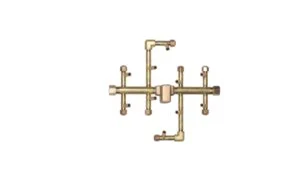
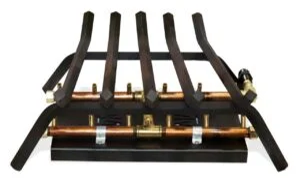
For the burner system, stainless steel is the appropriate standard for outdoor performance. It is designed to handle repeated heat cycles and exposure better than lower-grade materials. The burner pan, ignition components, gas connections, and drainage approach should be treated as part of the overall specification, not as secondary details hidden beneath the media.
Custom color matching is particularly valuable when a fire pit must sit beside distinctive pool tile, stucco, metalwork, or stone. Exact imitation is not always necessary. Often, the more sophisticated choice is a complementary color that gives the fire feature a clear identity while still belonging to the larger material palette.
A handcrafted, American-made unit also gives homeowners and trade professionals more control over dimensions, finish, and configuration than a generic retail product. USA Fire Bowls builds aluminum fire features in Murrieta, California, with customization options intended for this level of design coordination.
Design the Flame, Not Just the Box
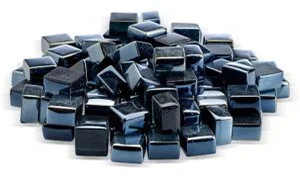
The flame bed is where the fire pit becomes an experience rather than a piece of outdoor furniture. Burner size and placement affect the flame’s distribution, while fire media affects its color, texture, and perceived scale. Fire glass produces a crisp, light-reflective look that pairs naturally with contemporary pools and polished hardscape. Lava rock has a more organic texture and can suit rustic or layered landscape settings.
Choose media with the surrounding finishes in mind. Dark glass can create depth against light stone, while lighter neutral media can brighten a charcoal or bronze enclosure. The flame itself will change the appearance of the media at night, so evaluate samples in both daylight and low light when possible.
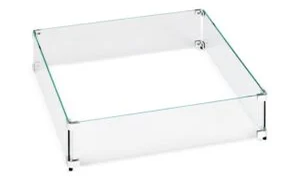
Flame guards are often a worthwhile addition for exposed patios, especially in windy areas. They can help define the fire opening, provide a measure of wind protection, and give the piece a more finished architectural profile. They are not a substitute for thoughtful site selection or safe operation, but they can improve the consistency of the flame presentation.
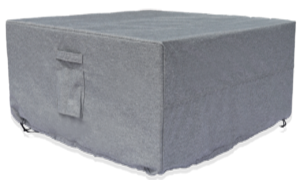
A fitted burner cover protects the interior when the fire pit is not in use and gives the top a cleaner appearance during the day. Protective covers for the entire unit help preserve finishes and keep debris out of the burner area. These accessories are straightforward, but they support the long-term performance expected from a premium installation.
Plan Fuel, Controls, and Installation Early
Natural gas is often the preferred option for permanent backyard installations because it provides continuous fuel without the need to replace tanks. Propane can be a smart solution where gas lines are impractical or where the design calls for more flexibility. The right choice depends on site conditions, local requirements, desired BTU output, and how the feature will be serviced.
Do not leave fuel planning until the patio is complete. The gas route, shutoff location, access to controls, ventilation requirements, and drainage all need to be coordinated with the contractor before final hardscape work begins. A fire pit may look freestanding, but its most dependable installations are planned as part of the broader construction sequence.
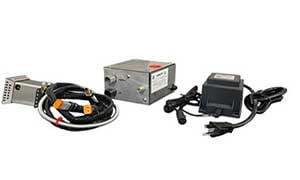
Electronic ignition and manual control systems each have a place. Electronic ignition offers convenience and can integrate well with a polished outdoor-living environment. Manual systems may be appropriate for simpler applications. In either case, controls should be accessible without becoming visually intrusive, and installation should be completed by qualified professionals familiar with applicable codes.
Let the Surroundings Carry Equal Weight
The fire pit should not be treated as the final accessory added after furniture arrives. It needs a relationship with the seating, lighting, planting, and surfaces around it. Low lounge chairs emphasize a long horizontal fire feature. A built-in bench can echo its length and create a composed conversation area. Layered landscape lighting allows the flame to remain the focal point without leaving circulation areas too dark.
Keep nearby furnishings appropriately scaled and choose materials that can handle outdoor conditions. If the space includes a pool, consider reflections across the water after dark. A well-positioned rectangular flame can create a striking double image, while a poorly placed one can produce glare from primary seating areas.
The best installations feel calm because every element appears to have been considered from the beginning. A rectangular fire pit earns that effect through proportion, craftsmanship, and disciplined coordination with the space around it. When the first evening gathering begins and the flame settles into the view, the feature should feel less like an addition and more like the element the patio was waiting for.